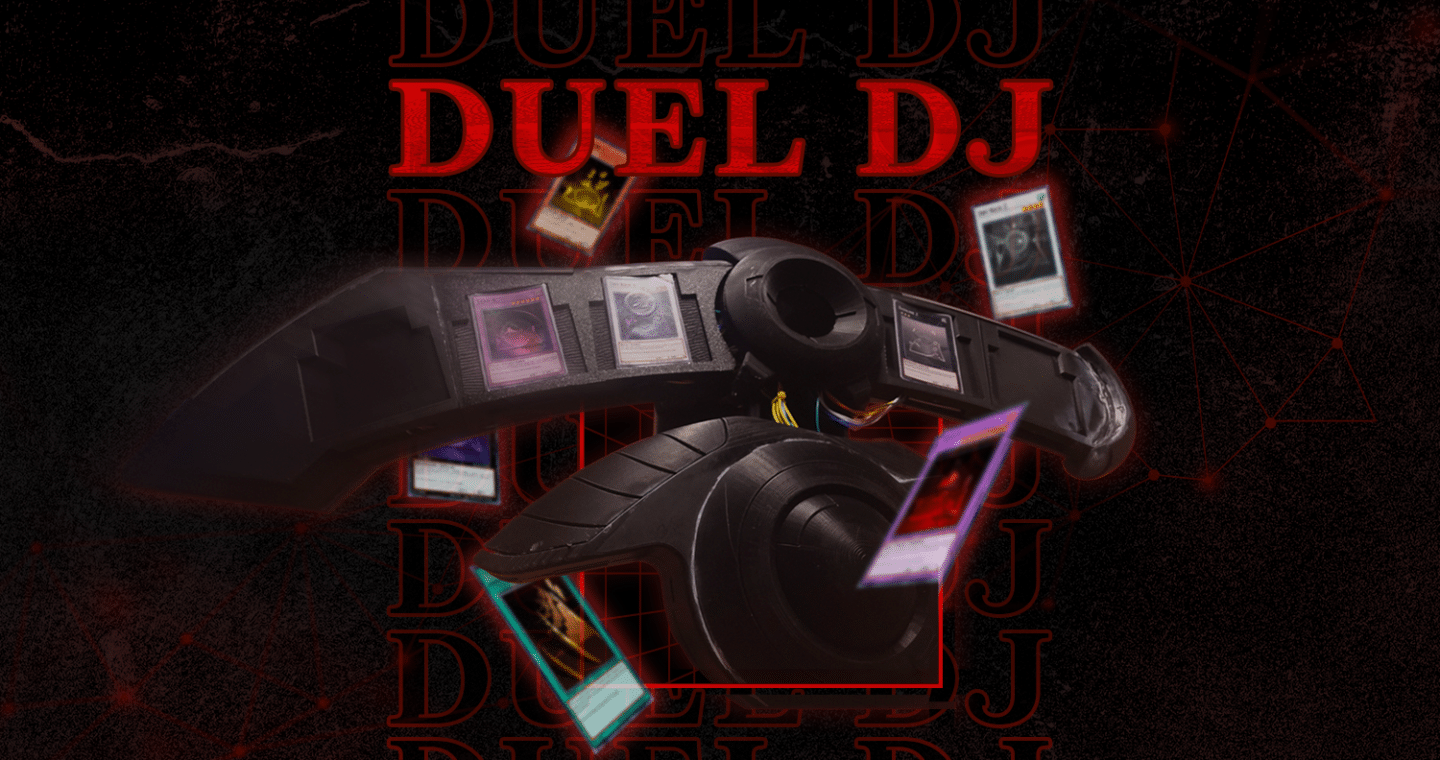
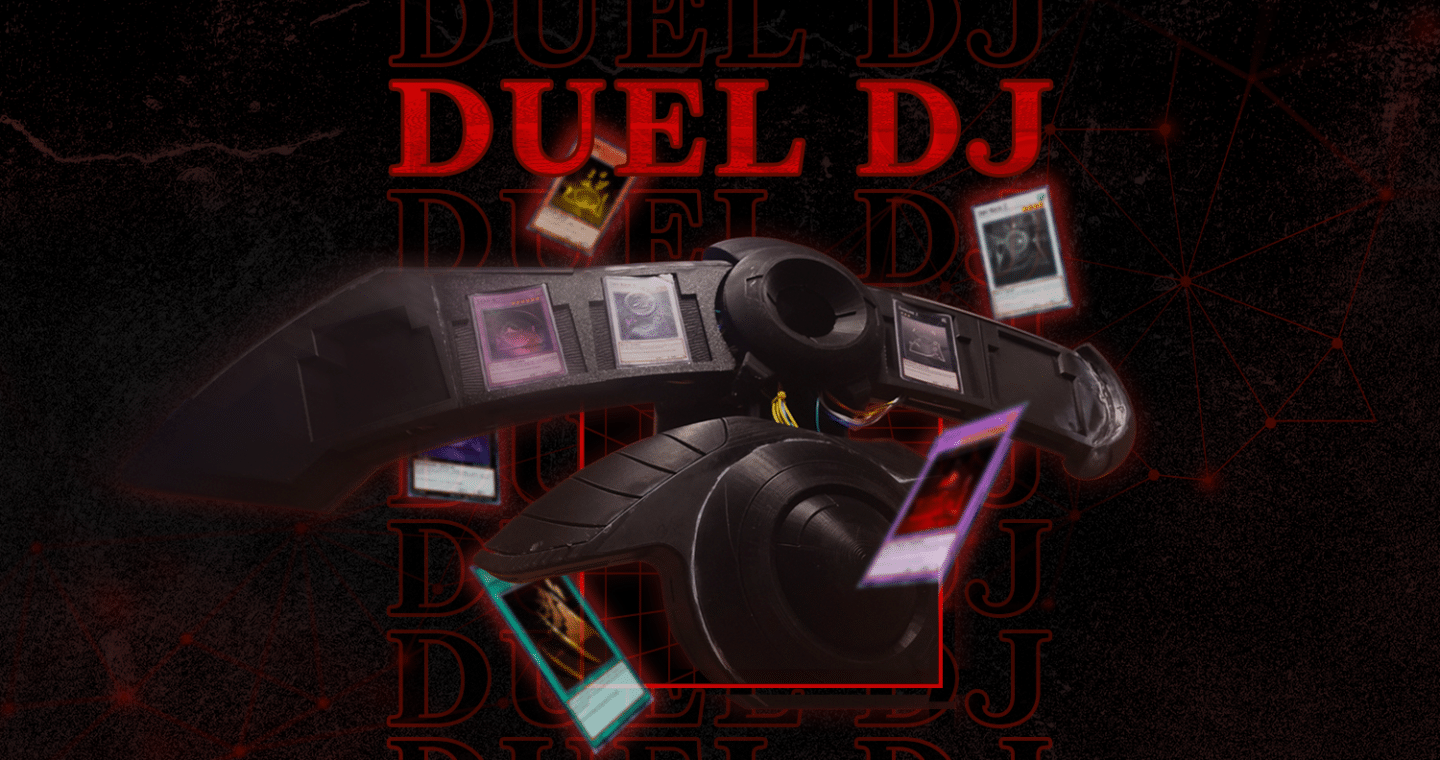
Duel DJ is an electronically enabled spin on the classic Yu-Gi-Oh duel disk that lets you play, arrange, and create music through custom made RFID trading cards. It aims to combine the hands-on feel of a physical prop while utilising the form factor of cards to explore the complex landscape of music.
Making music isn’t easy, whether through traditional instruments or electronic production. Research reveals countless latent issues present in Digital Audio Workstations (DAWs) for newcomers, especially those with little experience in music. Luckily, research also shows that if you put people in front of something that makes it easy to make sounds and beats that they come out feeling much more competent and confident.
As long as it has the following elements: sound design, constraints, and immediate feedback, it can be a sample pad, a game, an experience, an app, or whatever else. I decided to make something that takes advantage of that fact to try bridge the gap between music interest and music creation for the everyday dabbler that loves music who maybe hasn’t touched a thing.
Design concept video
For a songwriter, you don’t really go to songwriting school; you learn by listening to tunes. And you try to understand them and take them apart and see what they’re made of, and wonder if you can make one, too.
Tom waits
core purpose
The main question was: how can we create a product that balances breadth and depth while being novel and engaging, sparking curiosity? A common blocker on any creative task is the beginning, not knowing what is even out there and having to familiarise yourself with all these abstract concepts. So what if we could take that spark of curiosity from the product, and ease the user into exploring their curiosity about sounds and music? Let’s explore the user journey, and potentially yours, together.
Phase 1 – the cards
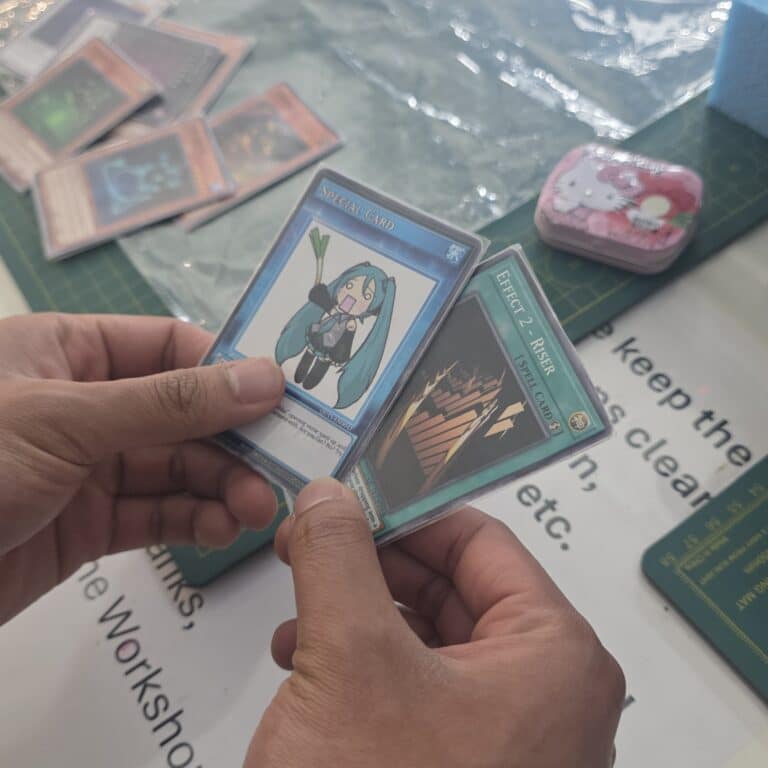
Cards In Hand
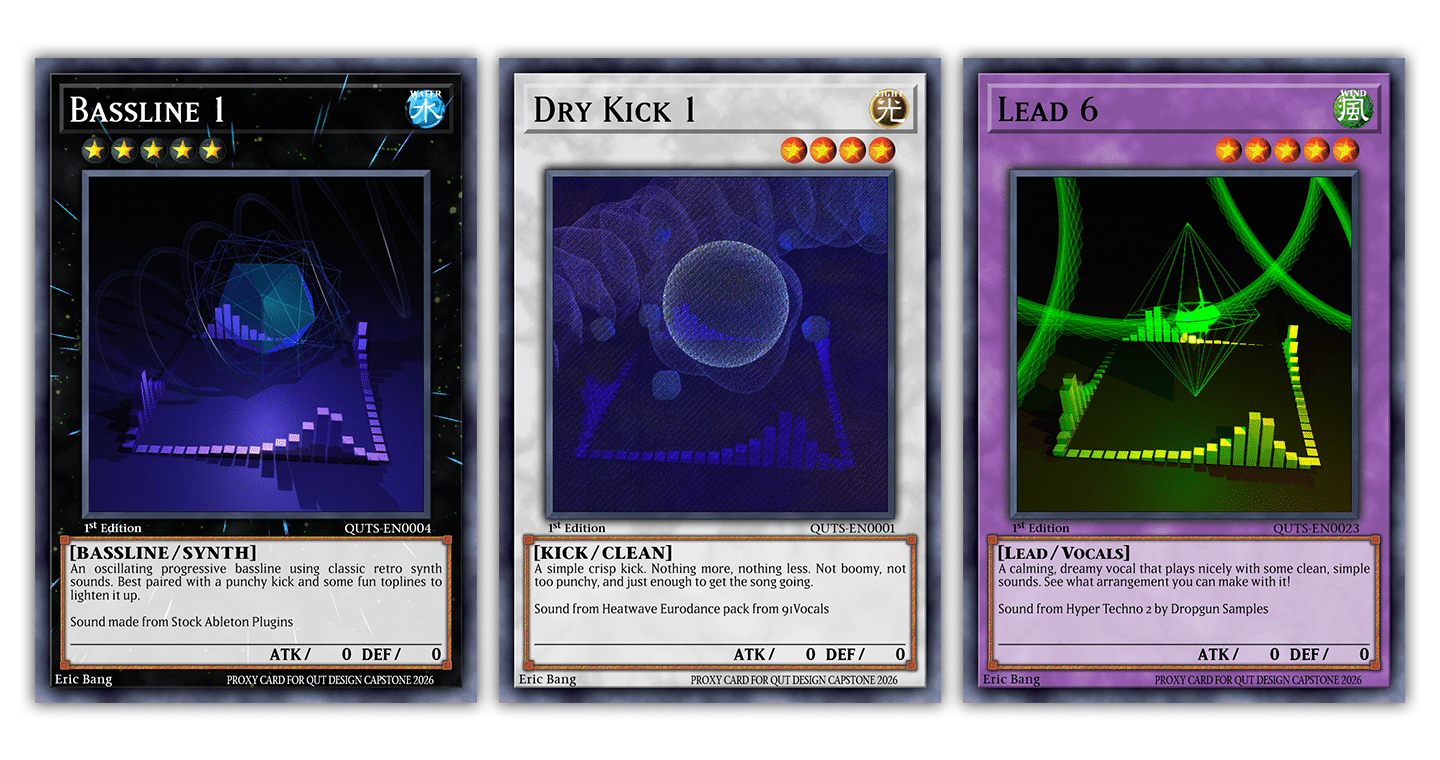
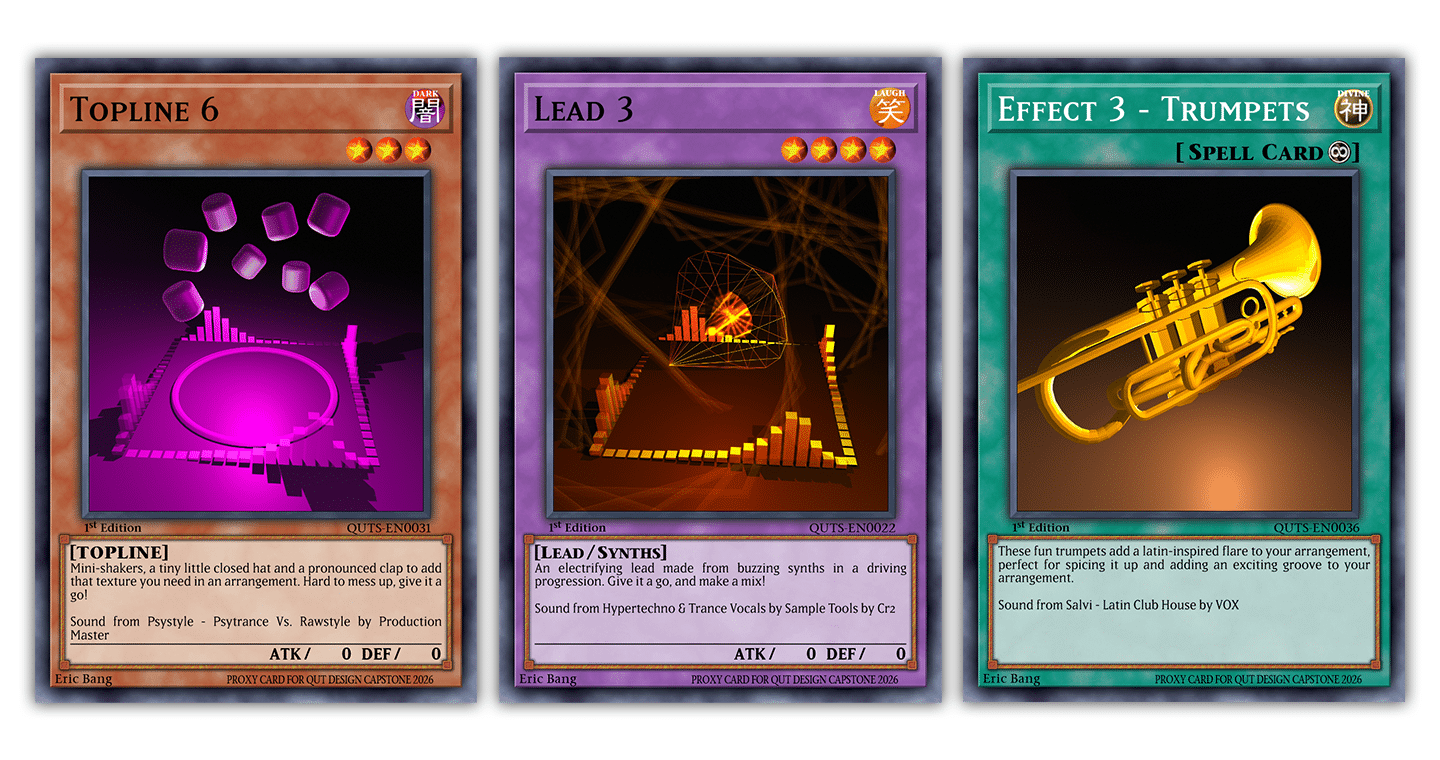
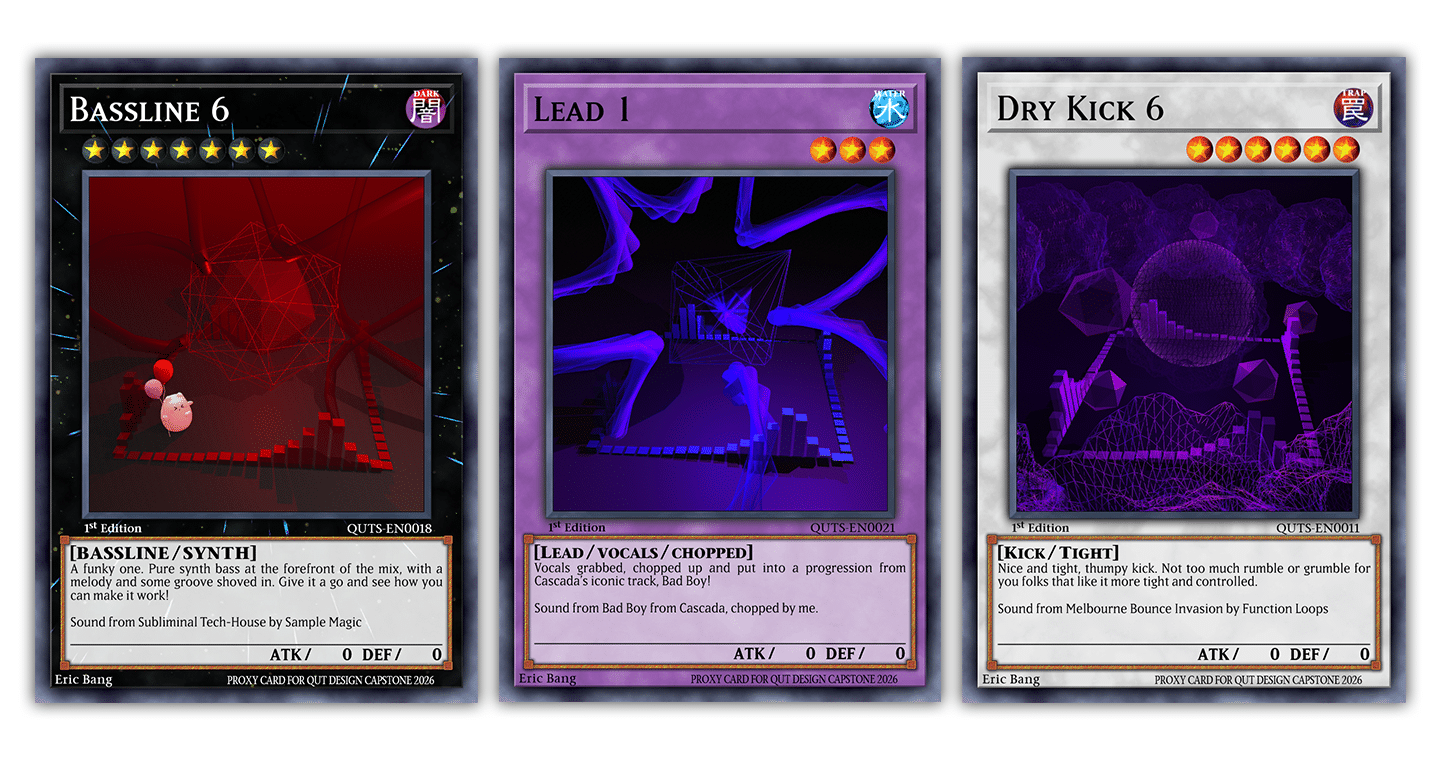
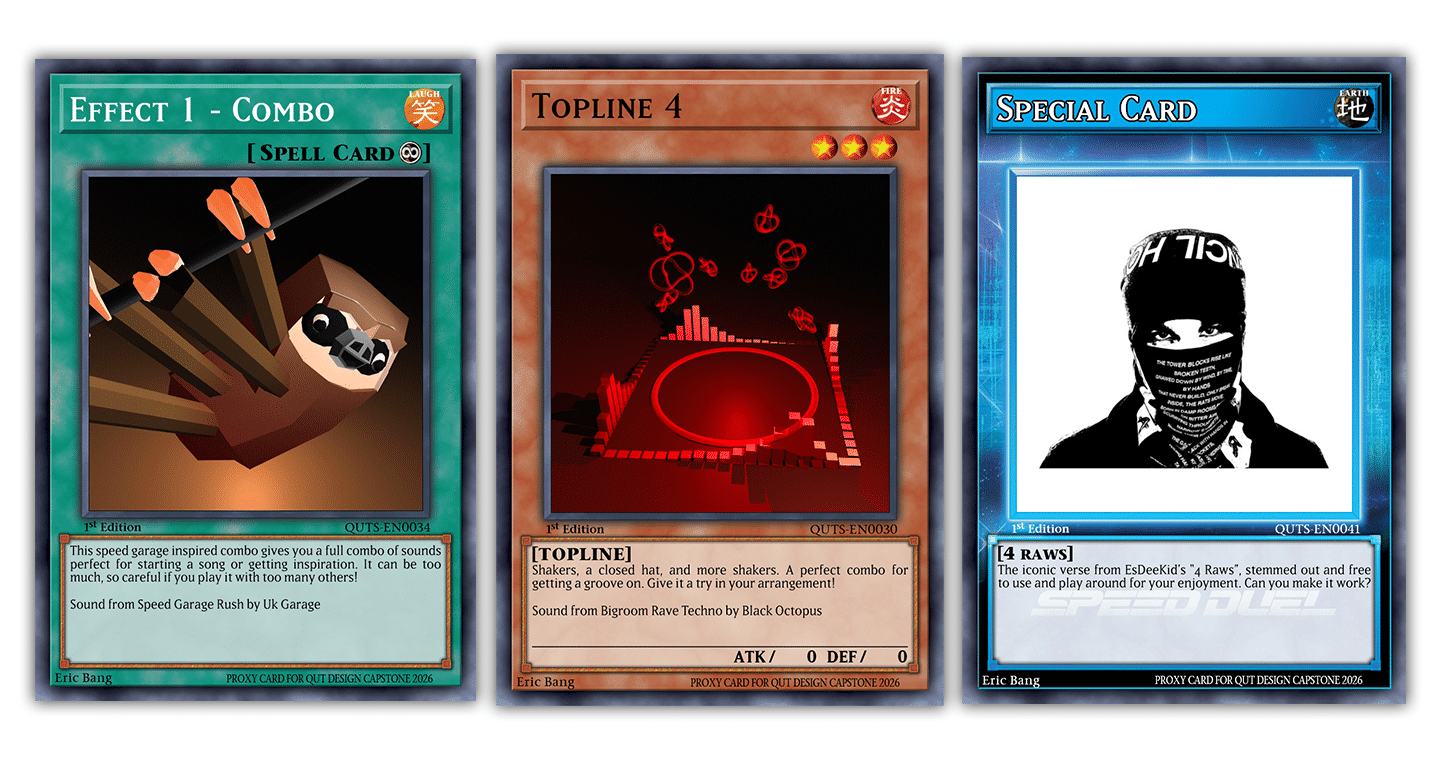
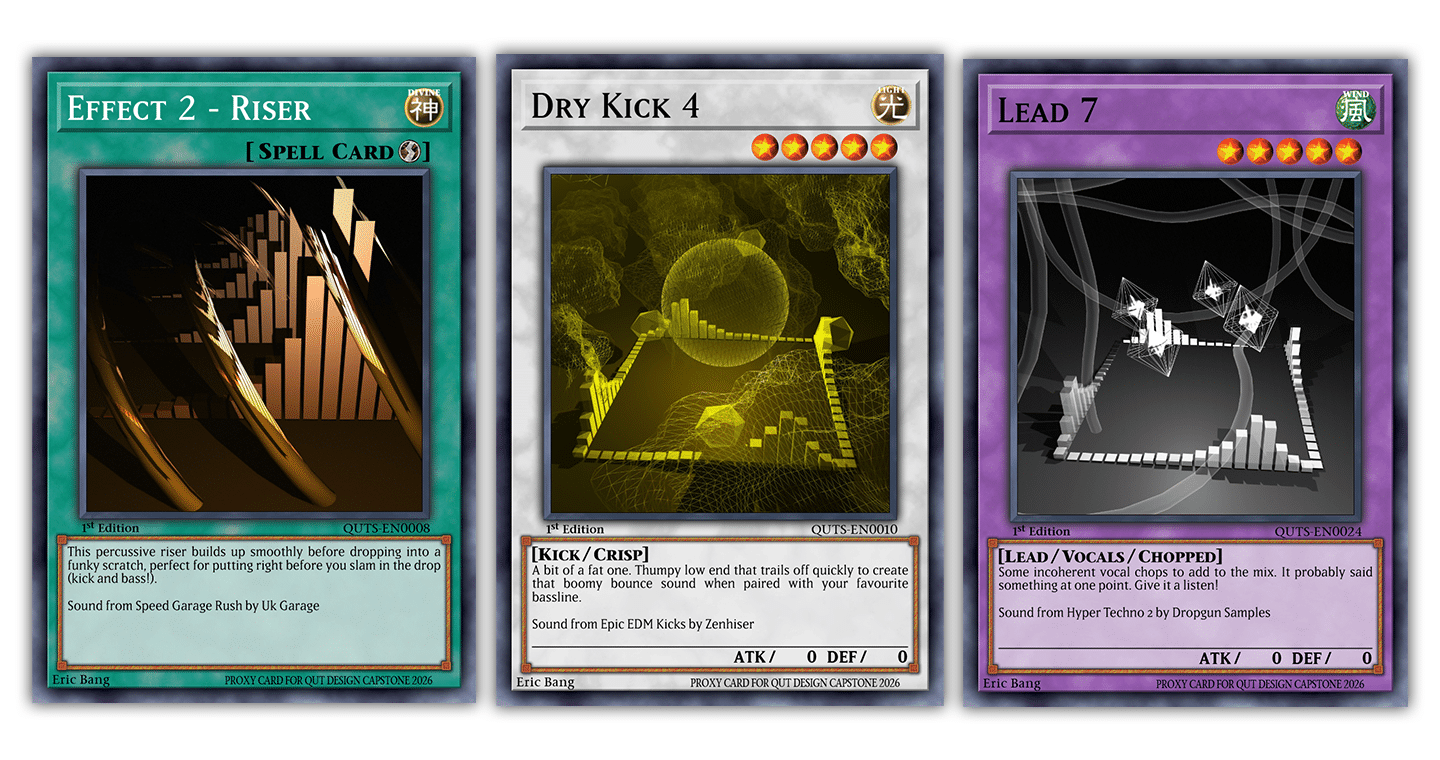
The first part of the interaction, and arguably the most important. Users pick up the playing cards from the device and reveal the card’s title, visual, and description, which all represent sounds and are colour-coded to their “sound category”. In my case, I’ve categorised this into Basslines, Leads, Kicks, Toplines, and Effects. The way Duel DJ is structured allows simple extensibility as adding more cards is 1 line of code, 1 wav file, and 1 extra card.
These cards are created by putting an RFID sticker on the back of card stock, then applying a vinyl sticker sheet on top to effectively create an RFID sandwich between the front and back designs. These stickers allow them to be scanned by the readers inside of the device itself, translating these little cards into tokens of sound to be seen and heard by the user.
Card Close Up
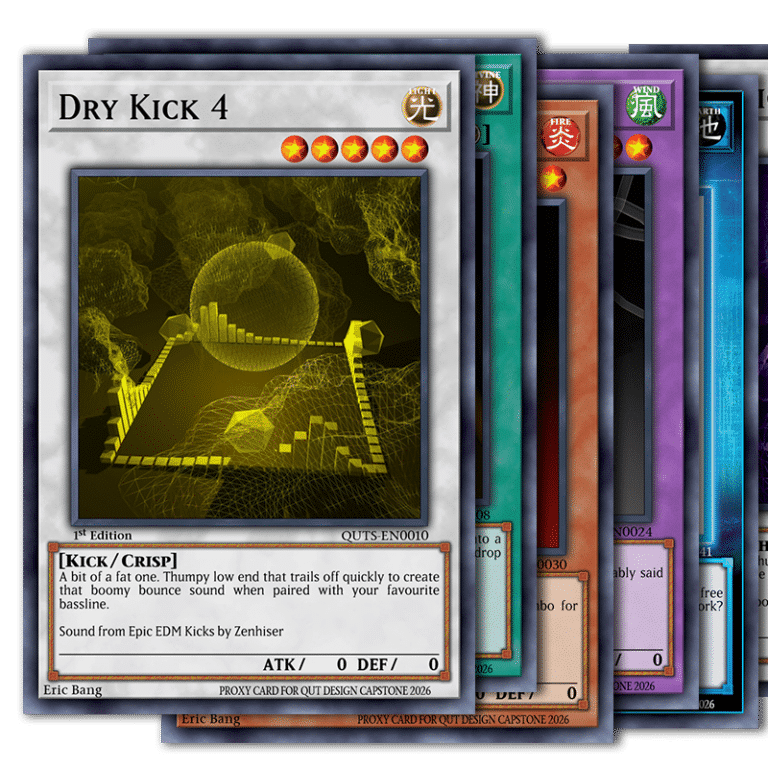
Each card art contains a custom-made 3D render, with some of them being evocative of the sound inside (trumpets have a trumpet, smooth vocals have wavy lines, sharp vocals have angular lines, etc). Additionally, each category is colour-coded with a matching sub-heading in the text box to give you a brief description.
For additional details, each description is handwritten by me to encourage curious or lost users, and to entice users to try certain combinations. While not required (as they are paid sounds), each card credits the original sample pack it’s taken from.
CARD EXAMPLES
phase 2 – the disk
Duel DJ Display
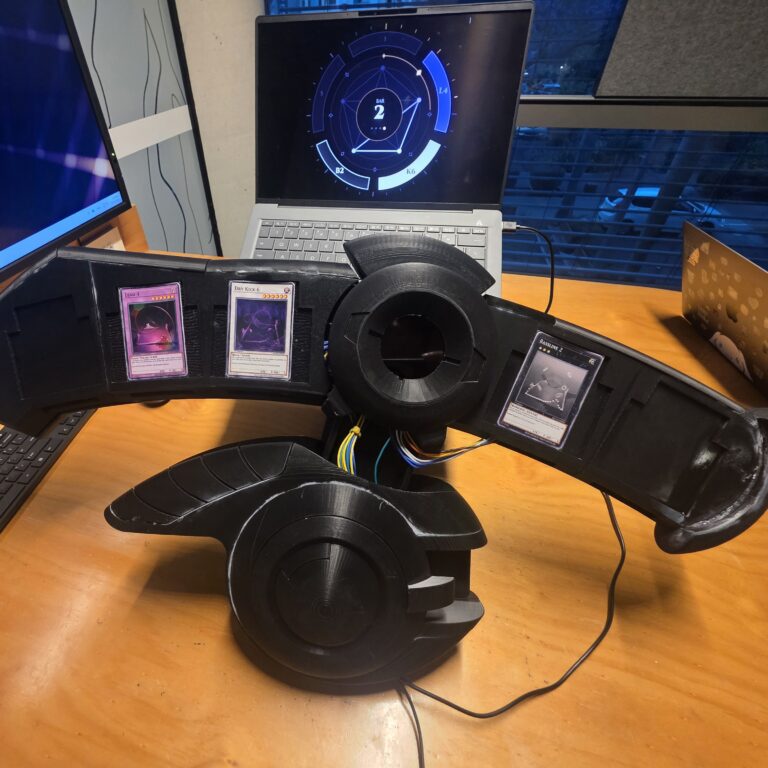
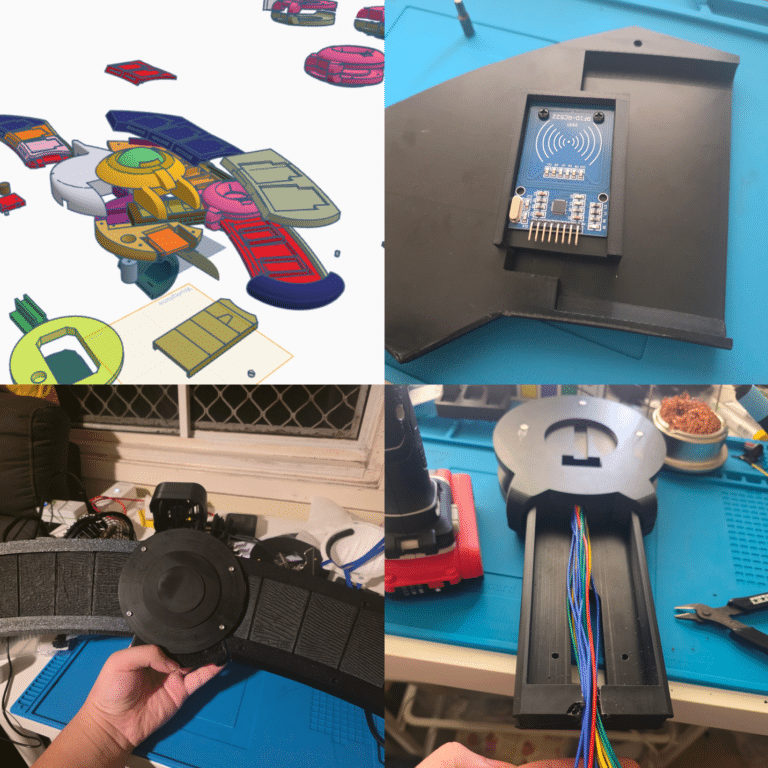
The form factor itself is based off of the Yu-Gi-Oh! Duel Disk. However, in place of moving parts, there’s electronic parts instead! These electronic parts consist of a Teensy 4.1 microcontroller (with its dedicated audio shield) connected to 5 RFID readers hidden behind each card slot on the device. This is all soldered together using a protoboard to ensure a strong, stable connection when being handled by users. The prop itself is 3D printed in PETG.
Duel DJ is powered completely off of a single USB A connection, with the best experience being connected to a laptop and/or display with the dedicated web file open for live visuals of your performance!
Making of Duel DJ
Modifications included, but are not limited to, adding custom tailored posts with screw holes for the RFID readers. These posts were all tailored in height to read cards while accommodating space for cabling spread throughout the device. The screw holes used M3 heat set inserts and were used for not only the RFID readers but for connecting each part of the prop together, enabling disassembly and troubleshooting when required. Lastly, channels were designed throughout the prop for wiring to fit through in bundles, minimising loose wiring and electronics to the user.
phase 3 – the AUDIOVISUAL CONNECTION
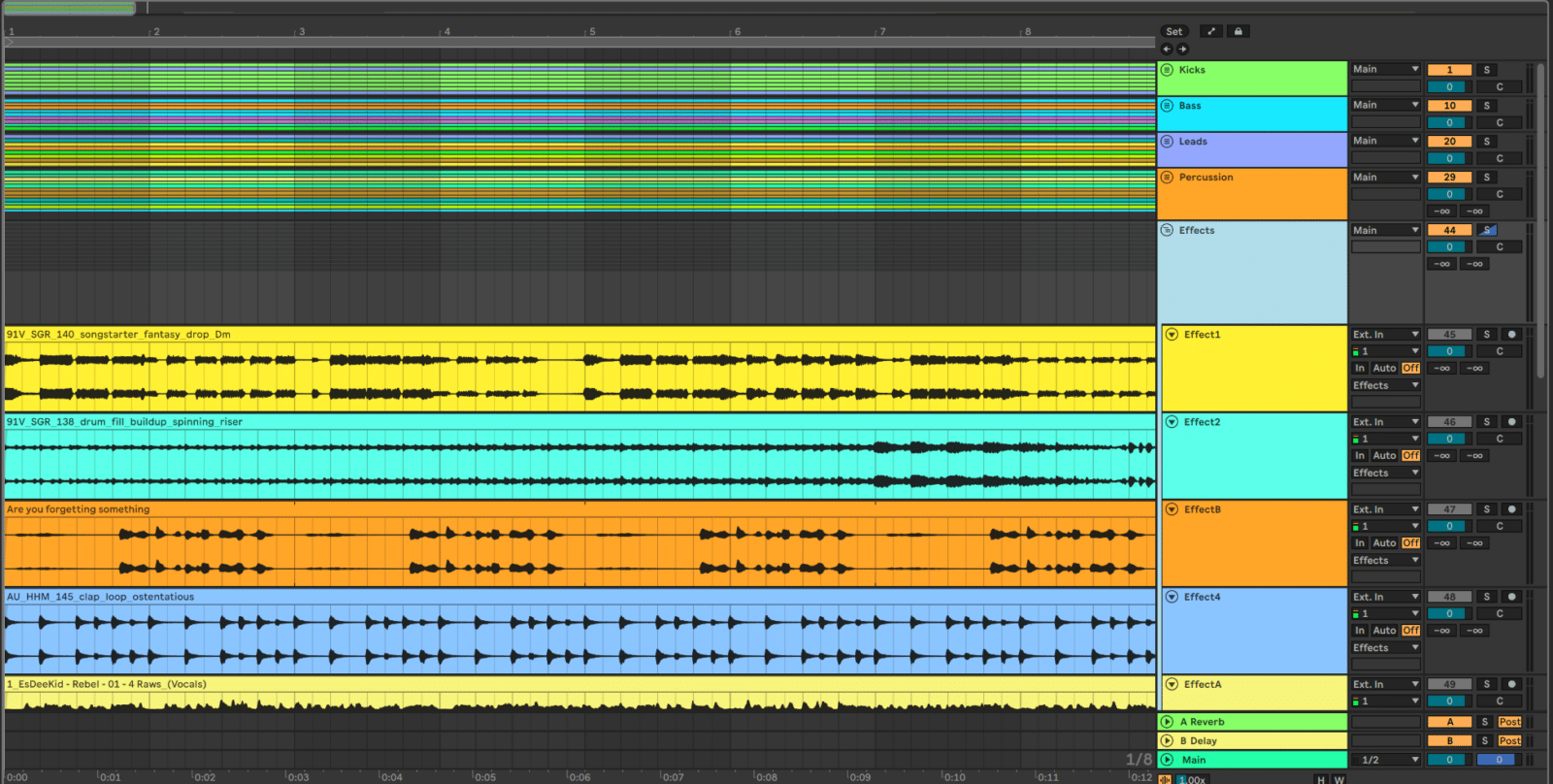
Each sound for this project was personally picked and aggregated from various sample packs in the Splice library to create a custom deck. Duel DJ’s current core deck is based off the “Hard Bounce” genre but mixes a variety of elements together, allowing users to create their own unique combinations. To make sure these are cohesive in various configurations, they are selected carefully, tested extensively, and tuned according to their category to minimise audible clashing. Without careful tuning, users would be discouraged from continuing to explore and potentially lose confidence in their ability.
The Display
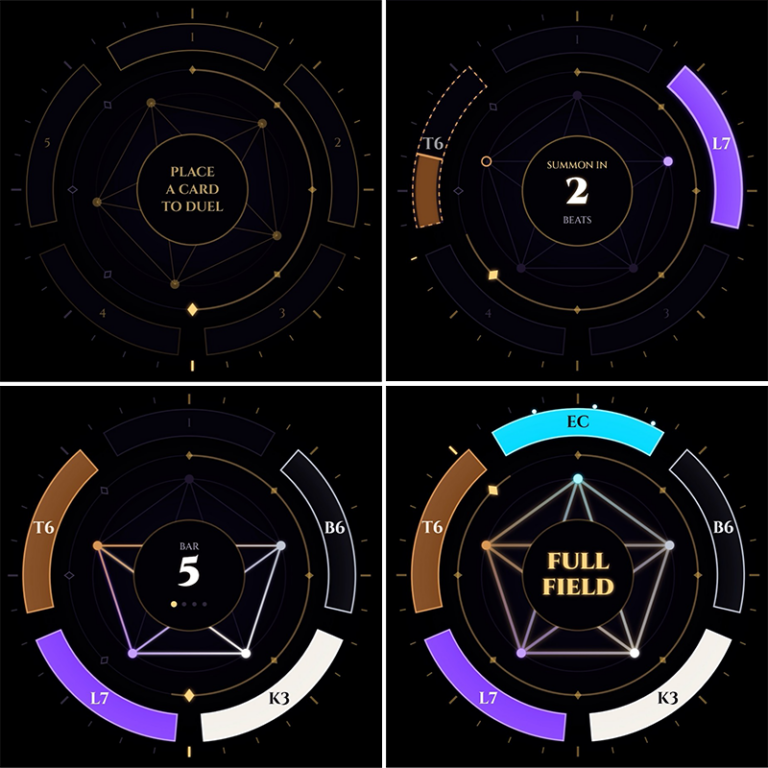
With Duel DJ comes a dedicated web file for visuals, made to represent exactly what’s happening on the screen and how it happens. When a card is scanned into a field, it enters a queue that plays the sound at the start of the next bar. Whichever sound it is, it will play its corresponding position within the phrase (8 bar loop) to ensure the user has a seamless and easy experience making arrangements without having to worry about timing or phrasing.
Each section around the circle corresponds to a field on the device, with the area inside representing the timing logic, current beat in the bar, how many bars into the phrase you are, and what fields are active.
What’s the end goal?
The final goal of Duel DJ, for me, is to curate a space for people interested in music to play with making arrangements through playing with sounds. Ultimately, music is just the coordination and meshing of sounds together in a progressive manner until you make it sound the way you want.
Ideally, Duel DJ will give people enough confidence in a novel, low-pressure environment and inspire them to go make music. Whether this be through curiosity or maybe even frustration that Duel DJ doesn’t provide enough options, I would love for people to continue creating.
Did you make the model yourself?
The original model is from MakeyToyz on cults3d.com and they have the full credit for modelling, publishing for sale, and the assembly instructions for the Duel Disk. The original prop is intended to be glued together and used for cosplay, however I customised the prop to make it fit and be more appropriate for electronics.
Are there going to be more cards/decks in the future?
At the moment, the 40~ cards represent the number of cards in a real Yu-Gi-Oh! deck, although Yu-Gi-Oh! decks can contain up to 60 cards. Additionally, I believe future expansions will explore different genres of music through new decks that incorporate different sounds and arrangements that I couldn’t think of. To do this, I would love to collaborate with musicians and producers in other scenes.
Get your game on!
Jaden yuki (from yu-gi-oh! gx)
Eric Bang
Eric is an interaction designer driven by exploring how technology can help people make and create. Always looking for ways to explore the intersection of people, technology, and purpose, Eric seeks to create services and interfaces that people feel compelled to use. User engagement and experience, whether physical or digital, is what drives his designs.