THE PROBLEM
Creating short-form video content can be time-consuming, technically demanding and intimidating for people with limited editing experience. Small business owners and everyday users may understand the value of social media video, but recording, editing, adding captions, motion graphics and music can still require time, confidence and knowledge of editing software. As a result, the process can feel like an extra workload rather than a simple way to communicate an idea. FEED responds to this problem by exploring how video creation can be simplified into a guided, playful and more approachable experience.
Insights
The project revealed that users respond positively to playful, character-driven interactions, but they still need clear guidance to understand what the system does and how to begin. User testing showed that the core interaction flow was engaging once participants started, while the biggest frictions came from onboarding, physical control affordances and unclear functions. These insights helped shift the final design toward clearer instructions, simpler controls and a more exhibition-ready physical experience.
KEY FEATURES
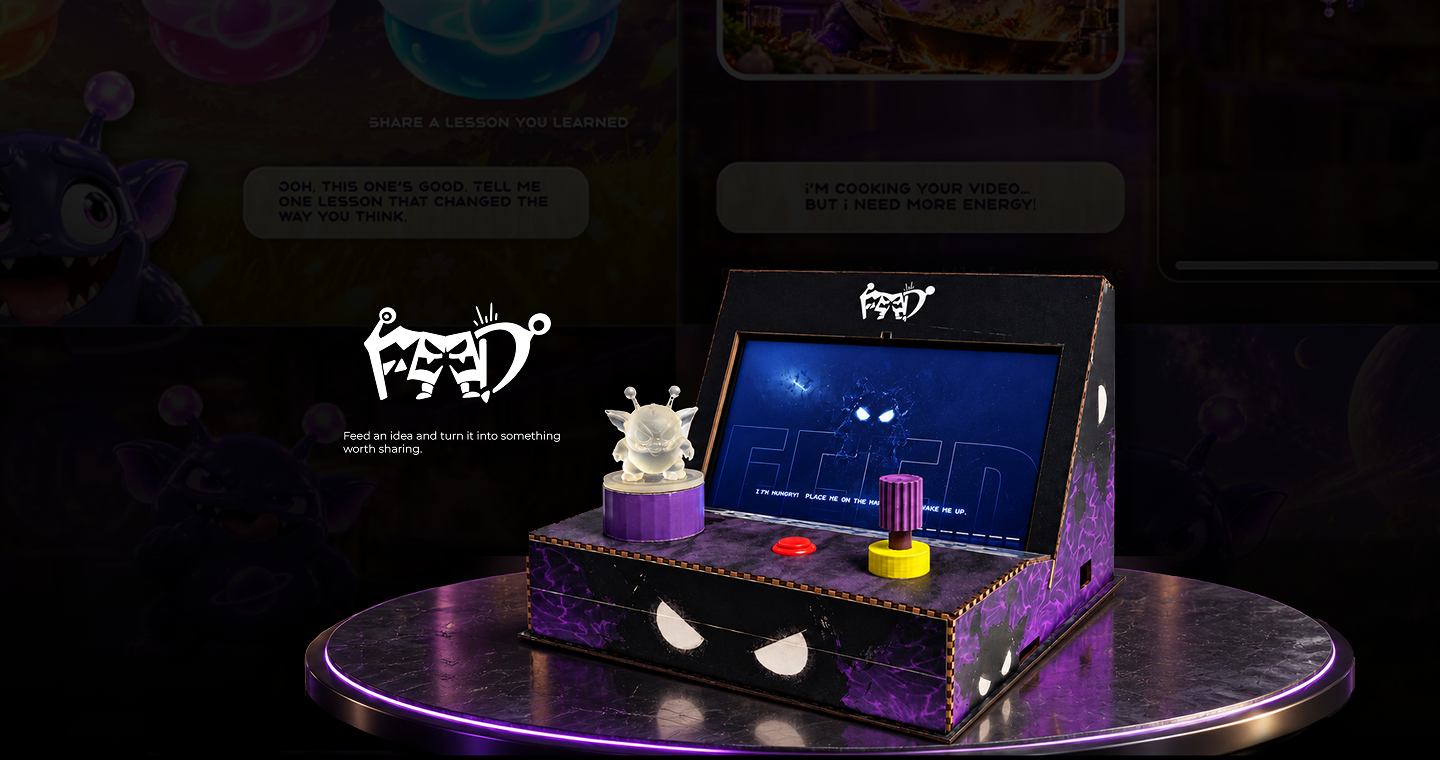
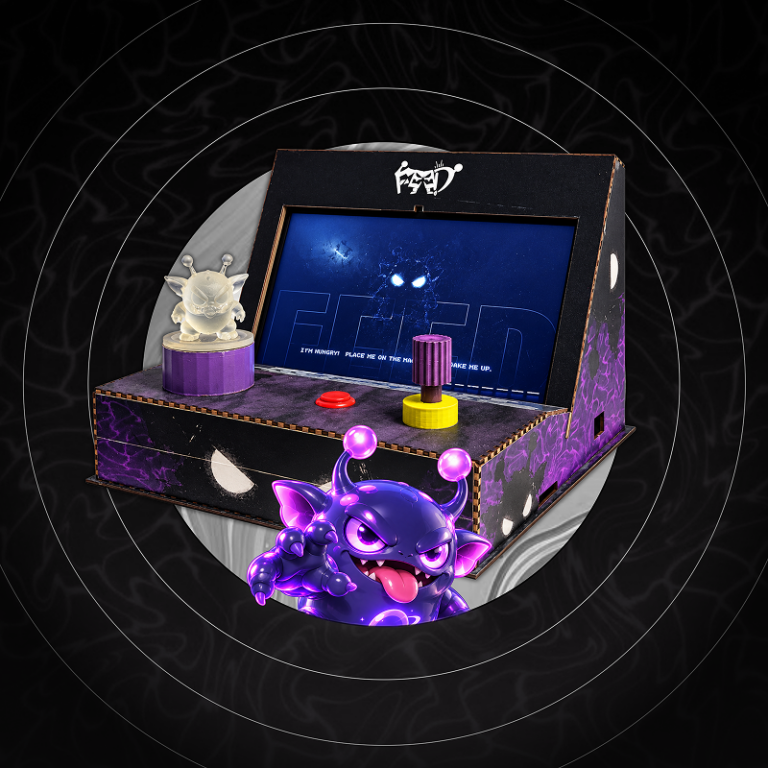
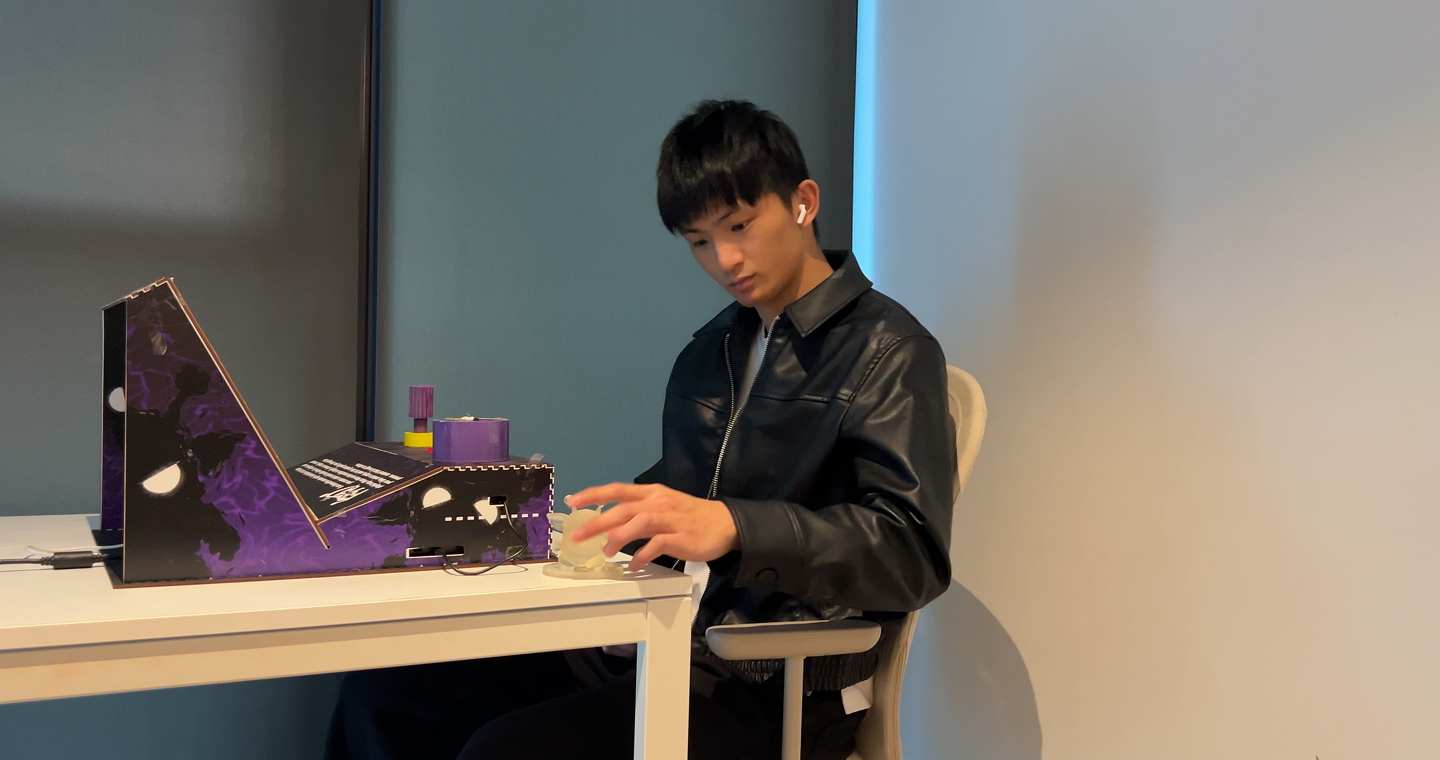
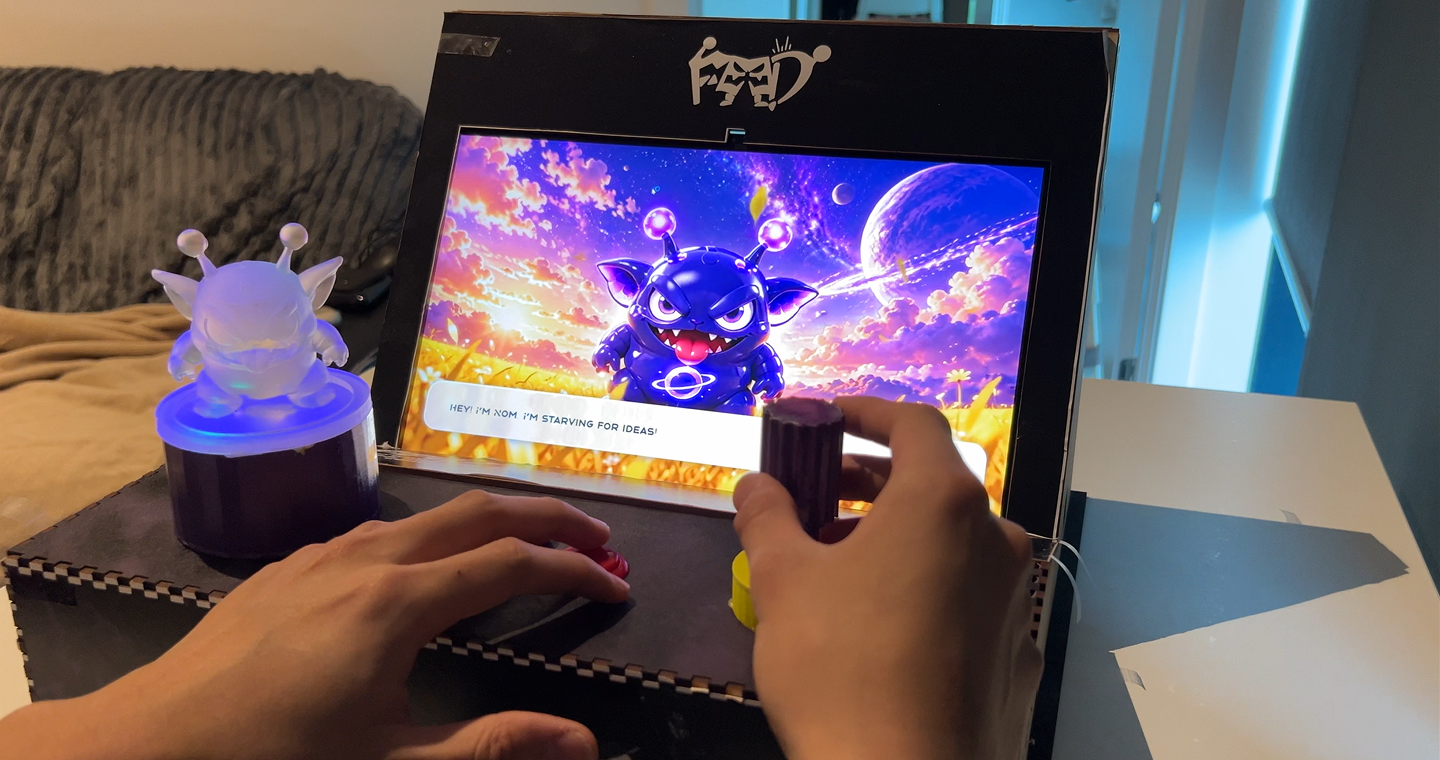
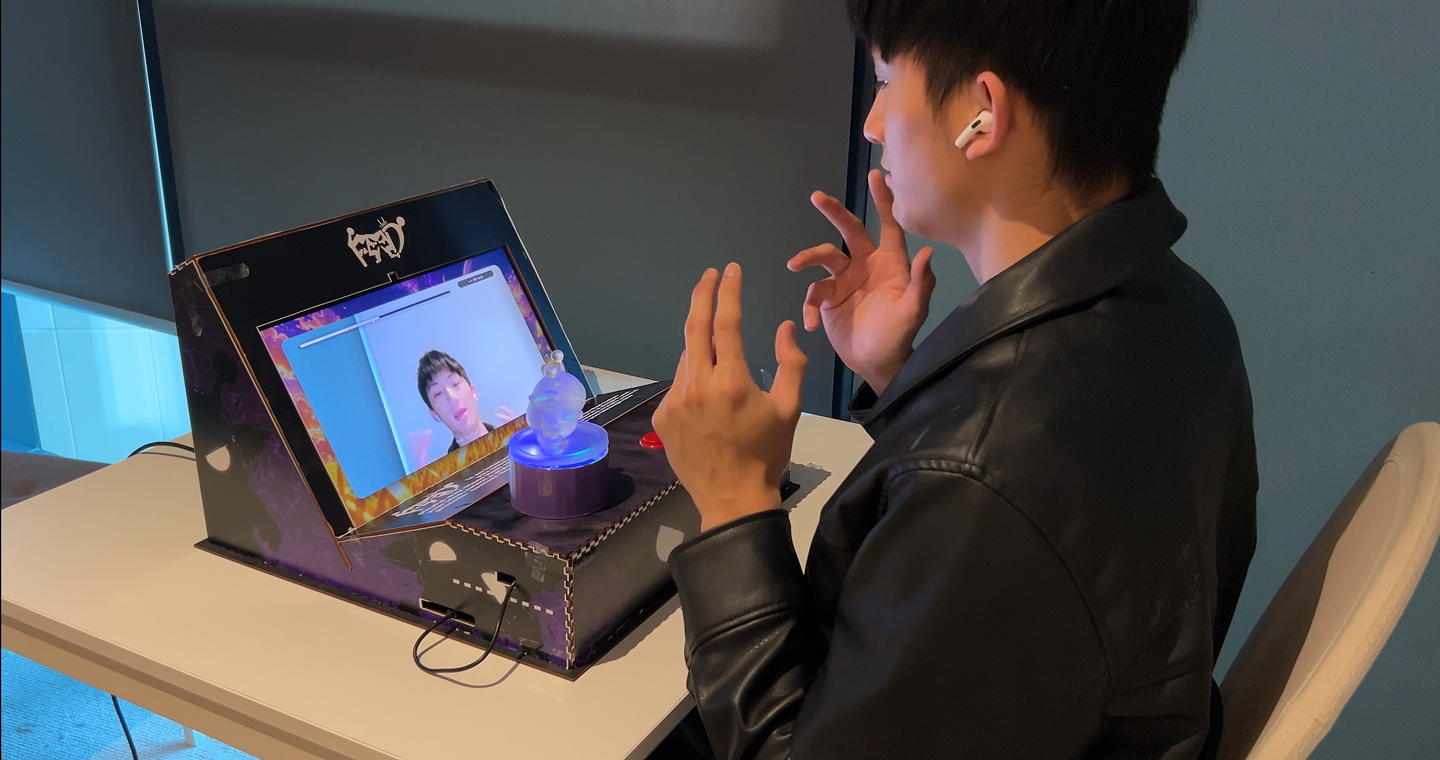
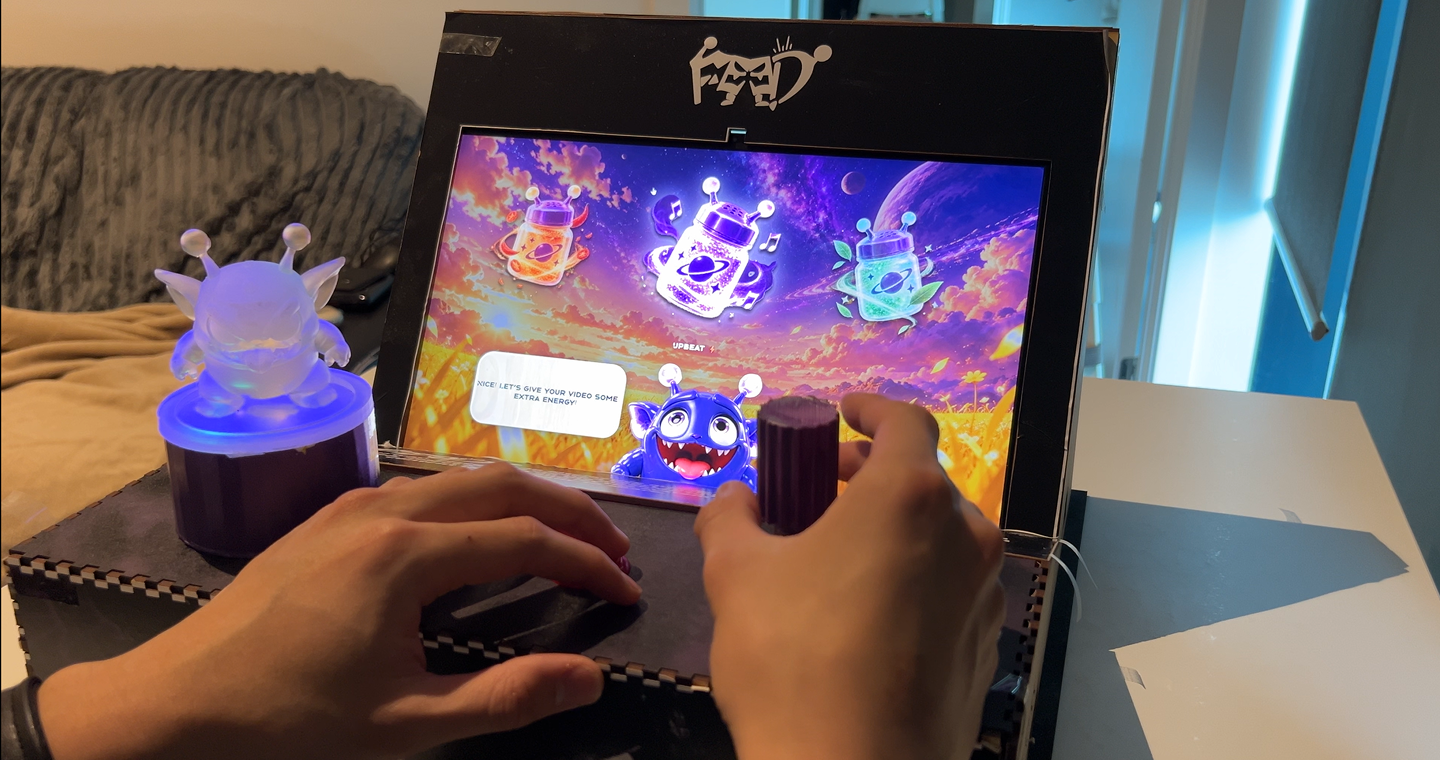
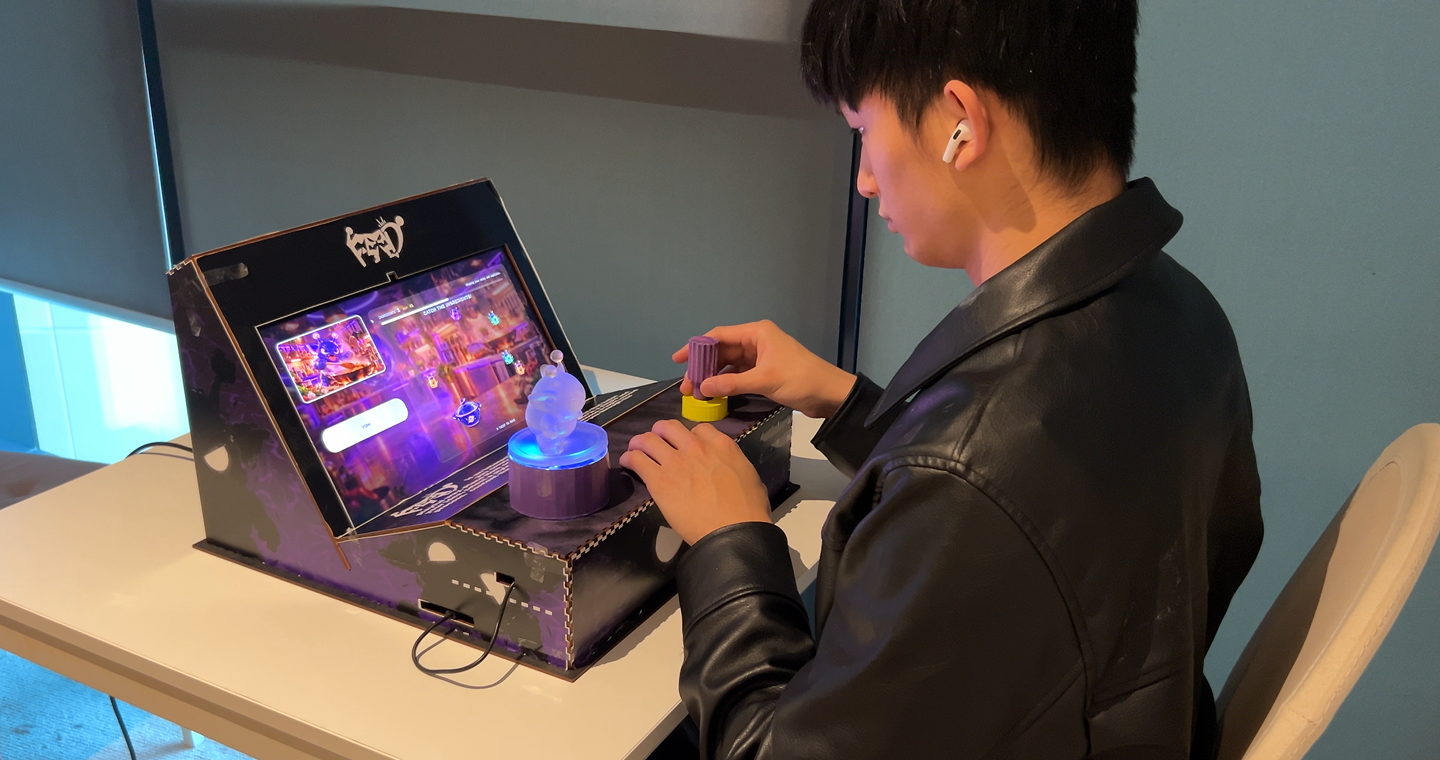
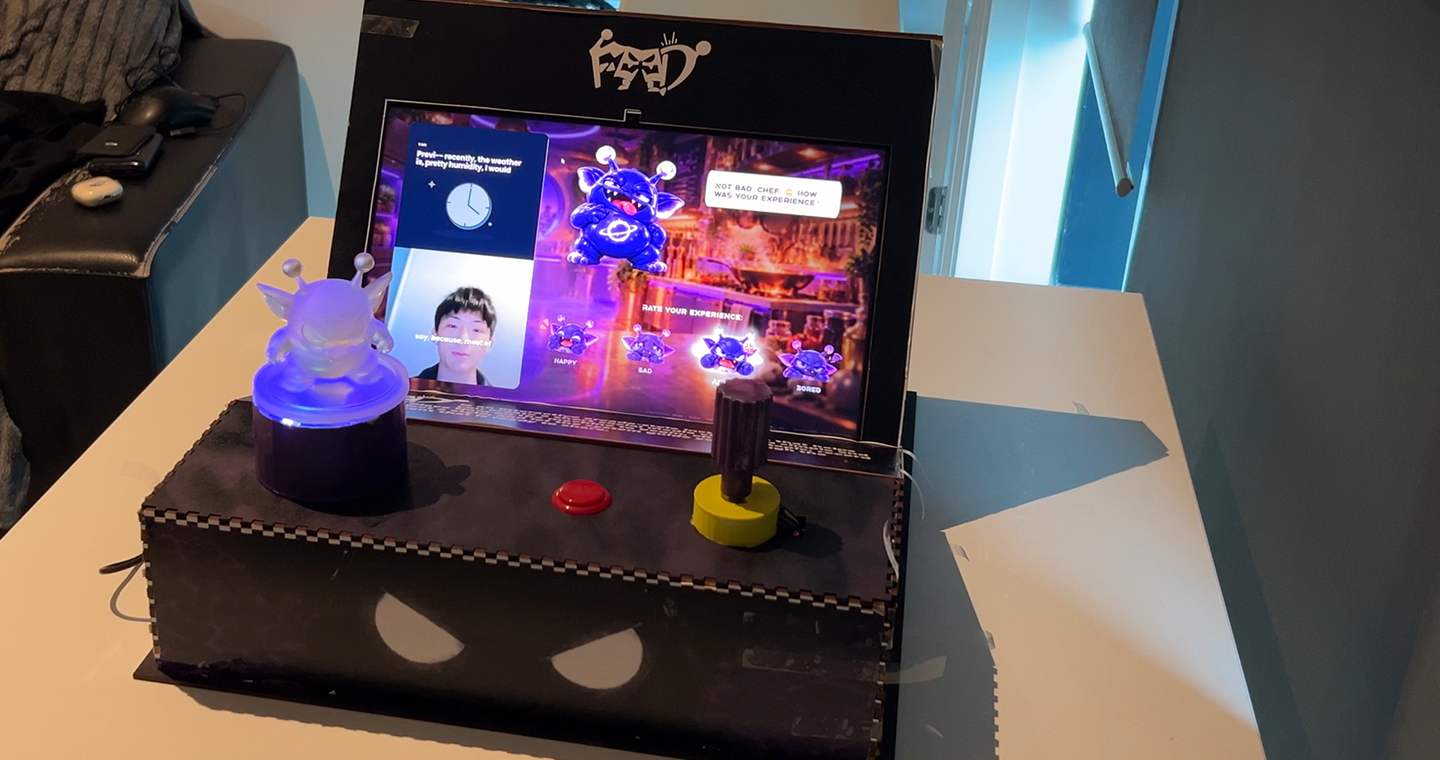
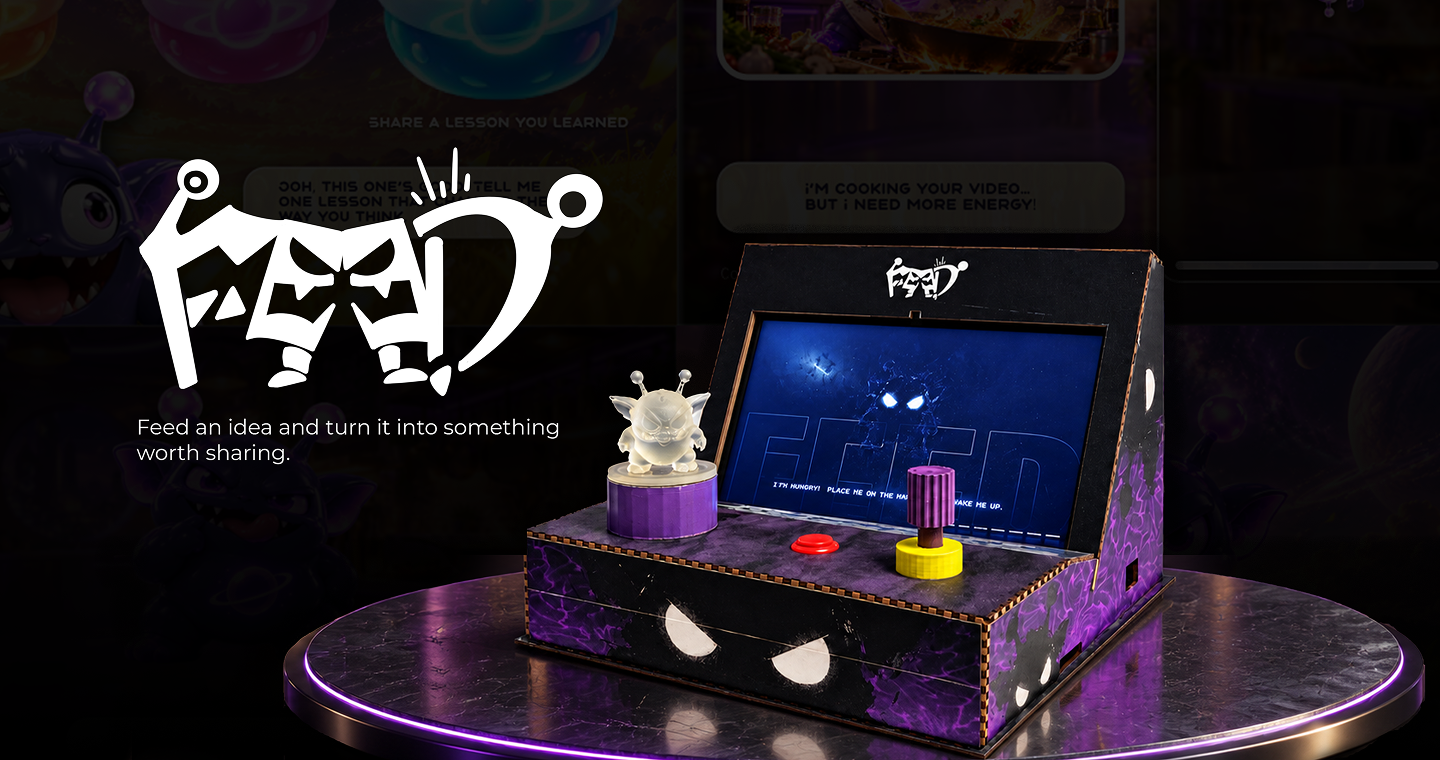
FEED combines tangible interaction, character-driven storytelling and AI-assisted media creation into one playful experience. Users activate the installation by placing Nom on the machine, navigate the interface through simple physical controls, record a short talking-head video, choose a creative style, and interact with a cooking-themed minigame while the system processes their content. The experience is designed to reduce the complexity of traditional video editing by replacing technical controls with guided, easy-to-understand actions.
Arcade Evolution
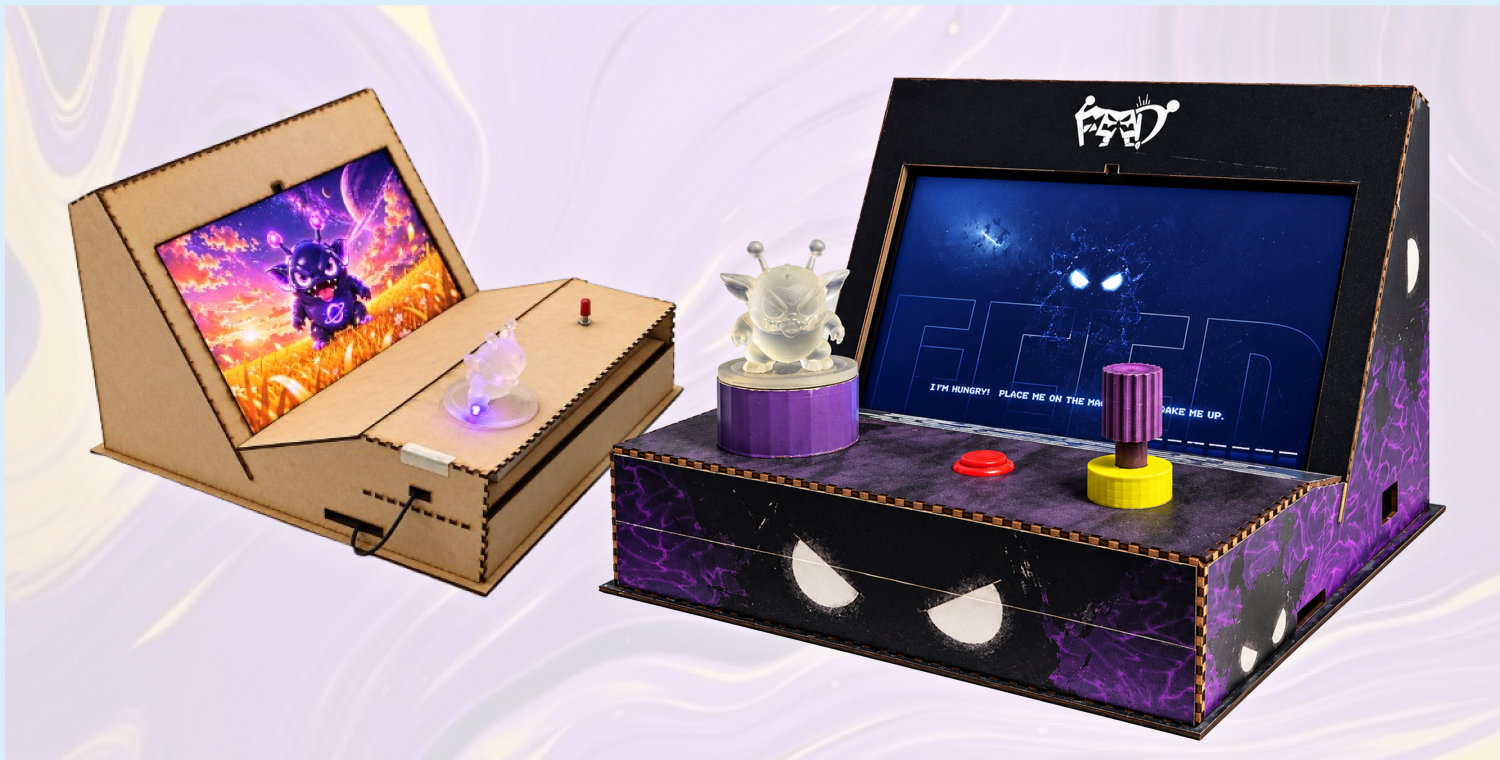
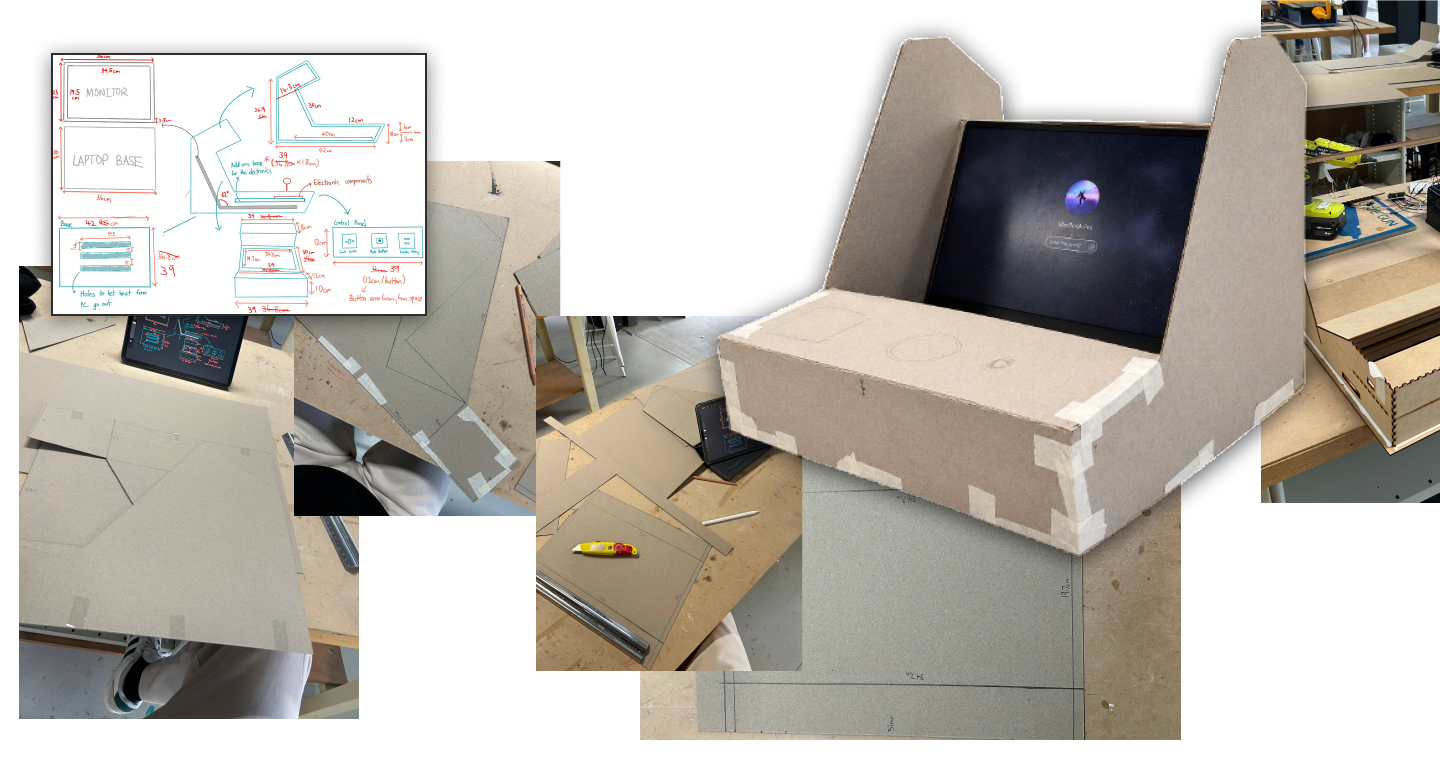
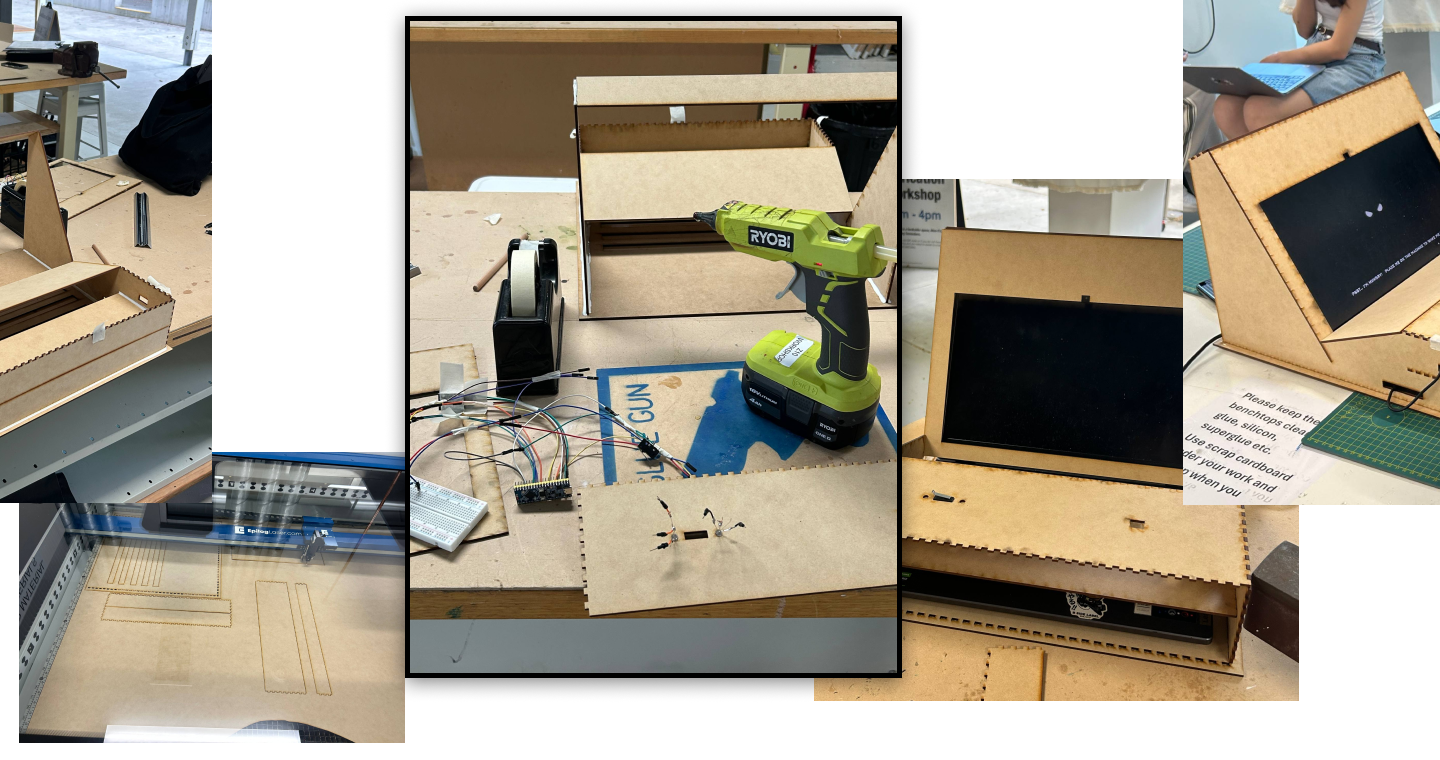
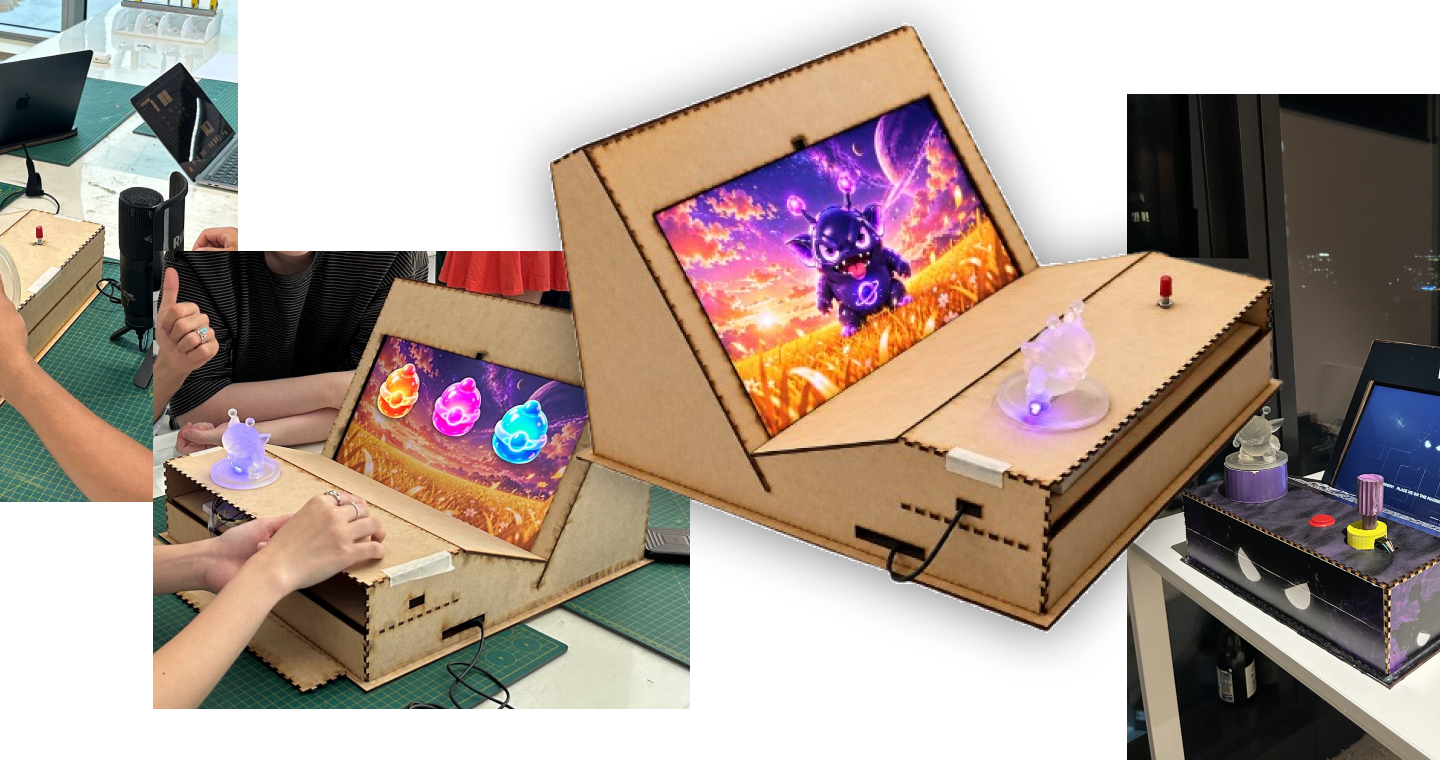
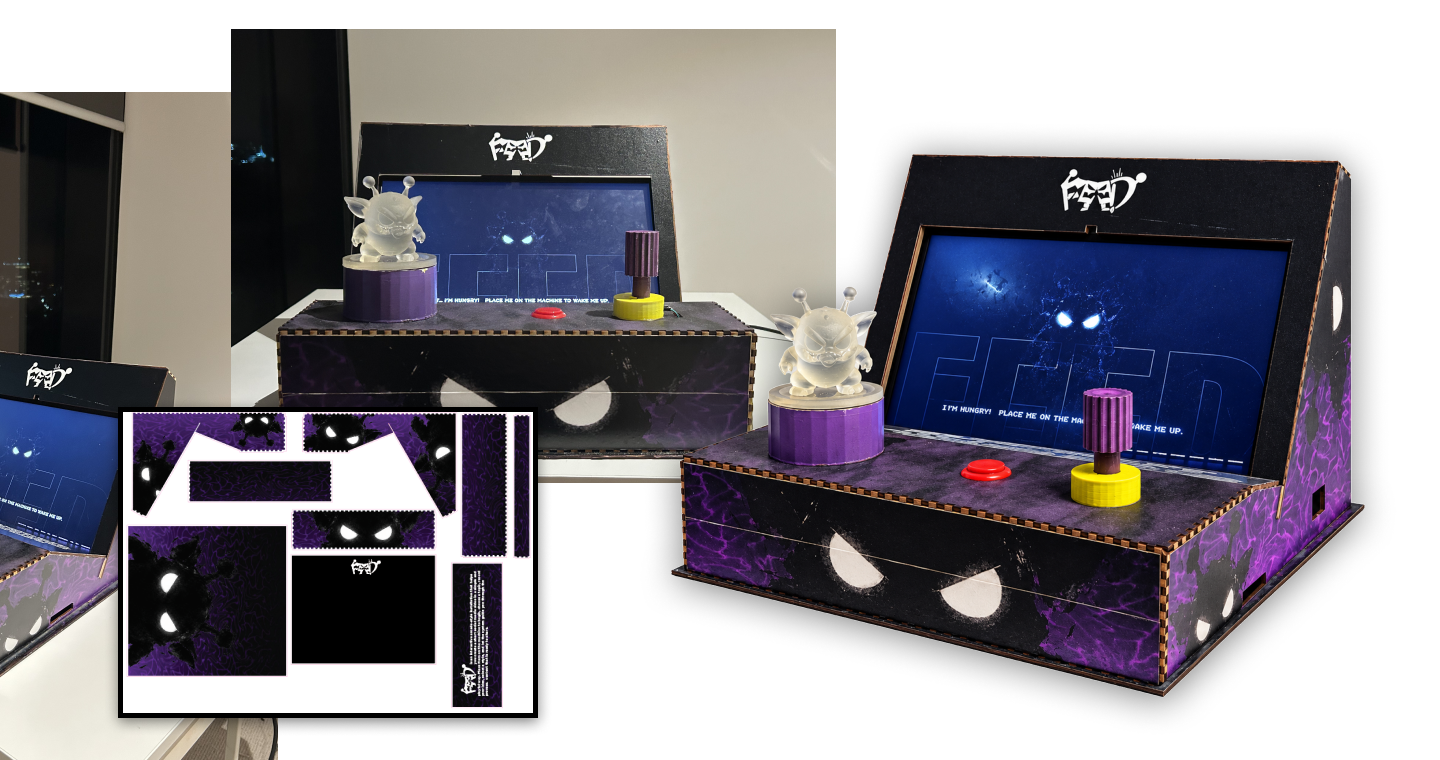
The physical form of FEED evolved through several stages of prototyping, beginning with a simple cardboard mock-up used to explore scale, screen placement and control layout. This was followed by a more refined MDF prototype that tested the cabinet structure, physical controls and placement of Nom. Each iteration revealed practical issues around dimensions, usability and fabrication, which informed the final arcade design. Through repeated testing, laser cutting, 3D printing and visual refinement, the prototype gradually developed into a more robust and exhibition-ready installation.
PROMOTION VIDEO
Good design turns complexity into something people can enjoy.