“And the secret of it all—the secret of the earthquake, the secret of the ‘temple of fire,’ the secret of the ocean basin, the secret of the highland—is in the heart of the earth, forever invisible to human eyes.”
— Reginald Aldworth Daly, Our Mobile Earth (1926)
Traer, M. (2016). Rooted Words brings poetry and prose back to Earth science. Stanford Doerr School of Sustainability. https://sustainability.stanford.edu/news/rooted-words-brings-poetry-and-prose-back-earth-science/
the design concept
Earthquakes begin with geological processes that occur largely out of sight. For audiences who have limited experience of major earthquakes, understanding these processes and their potential consequences can be challenging.
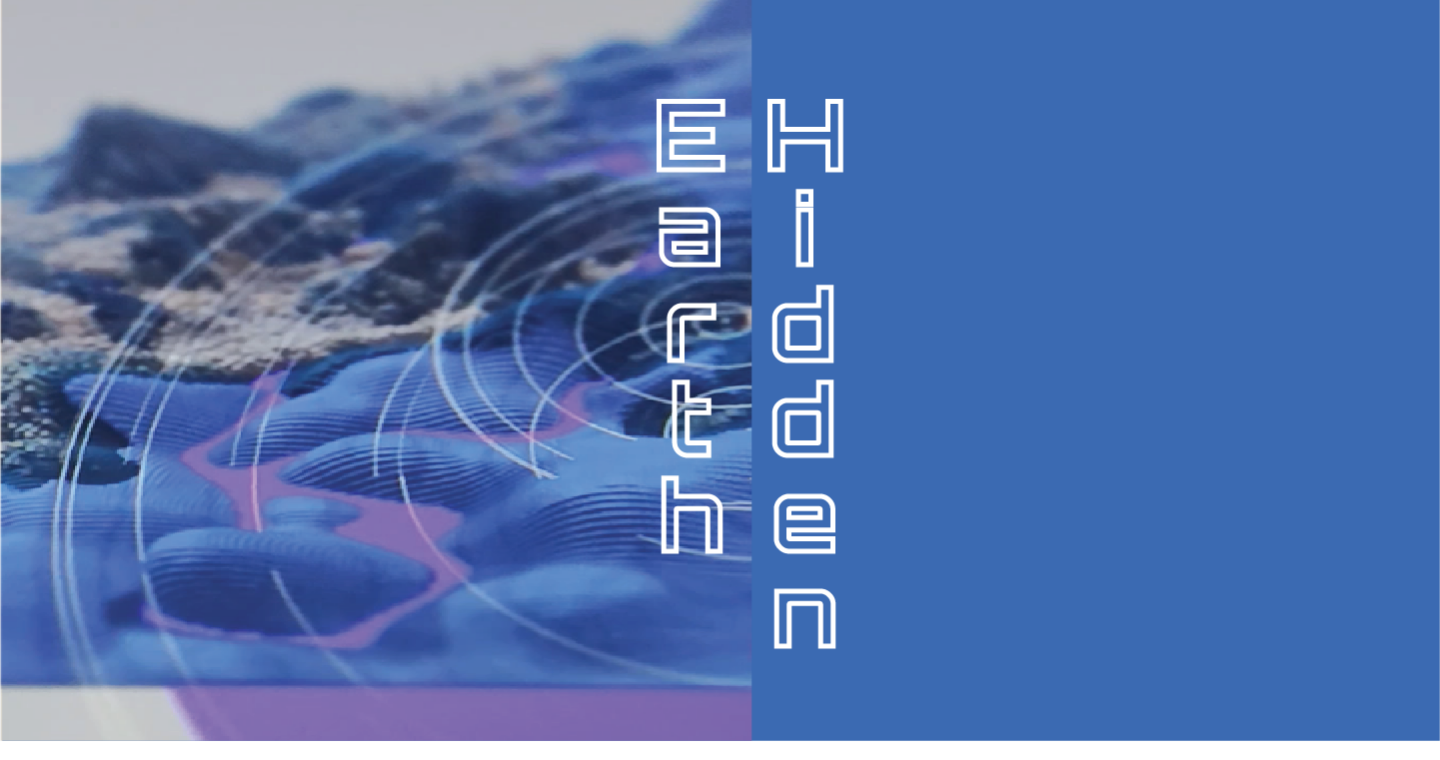
Hidden Earth explores how interaction and immersive audiovisual storytelling can make these hidden processes more perceptible. Inspired by the 2011 Tōhoku earthquake in Japan, the project connects tectonic movement, earthquake activity, and potential impacts on the surrounding environment.
Rather than relying on extensive written explanations, the installation uses projected visuals, sound, and physical interaction to encourage audiences to explore the relationship between what happens beneath the Earth’s surface and what can happen above it.
The experience
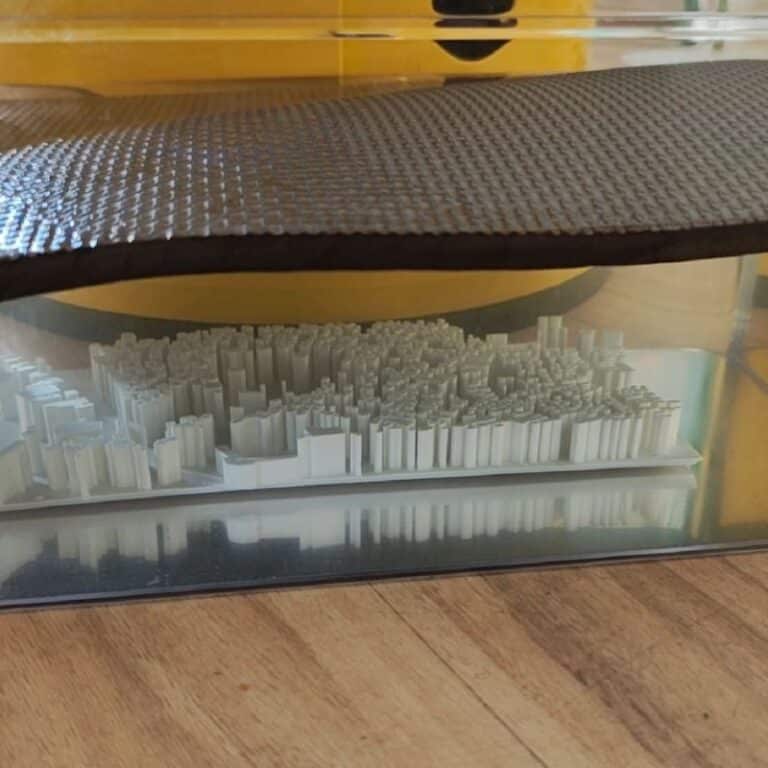
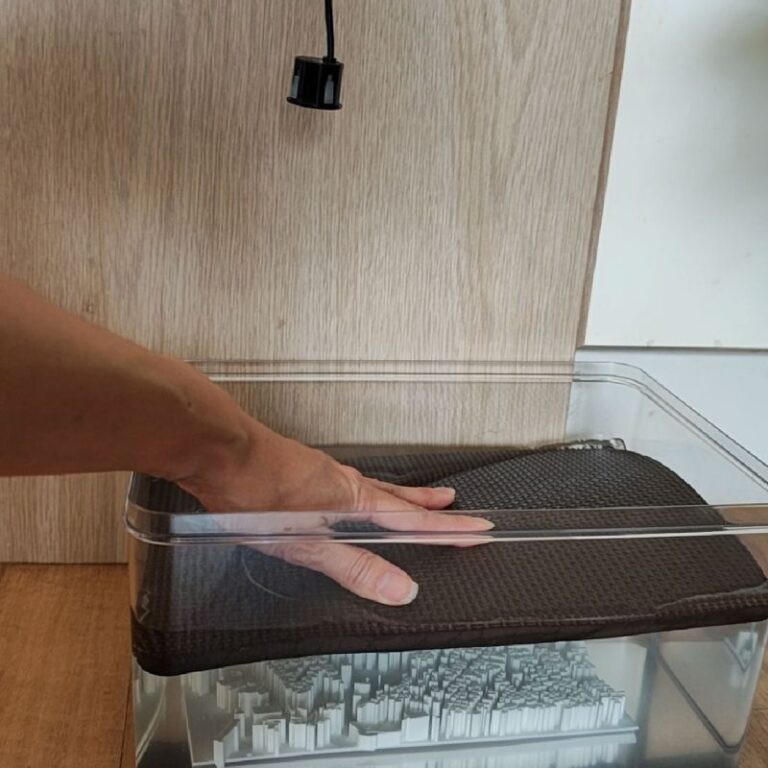
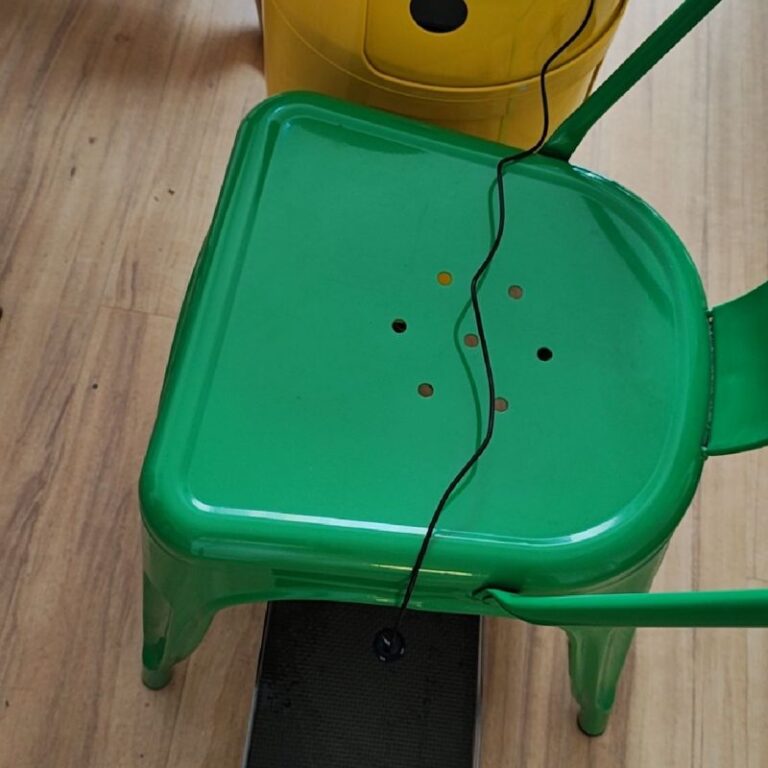
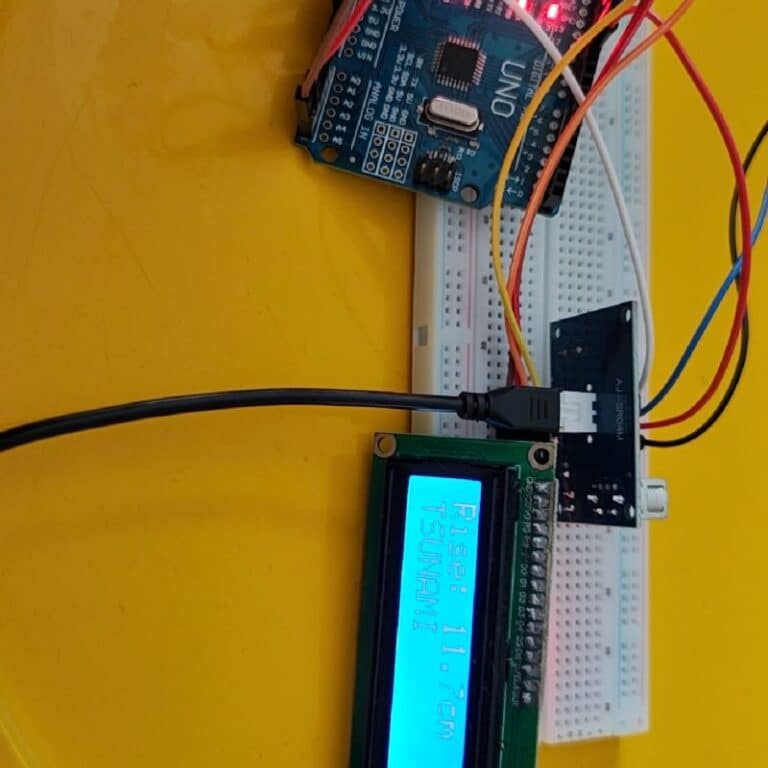
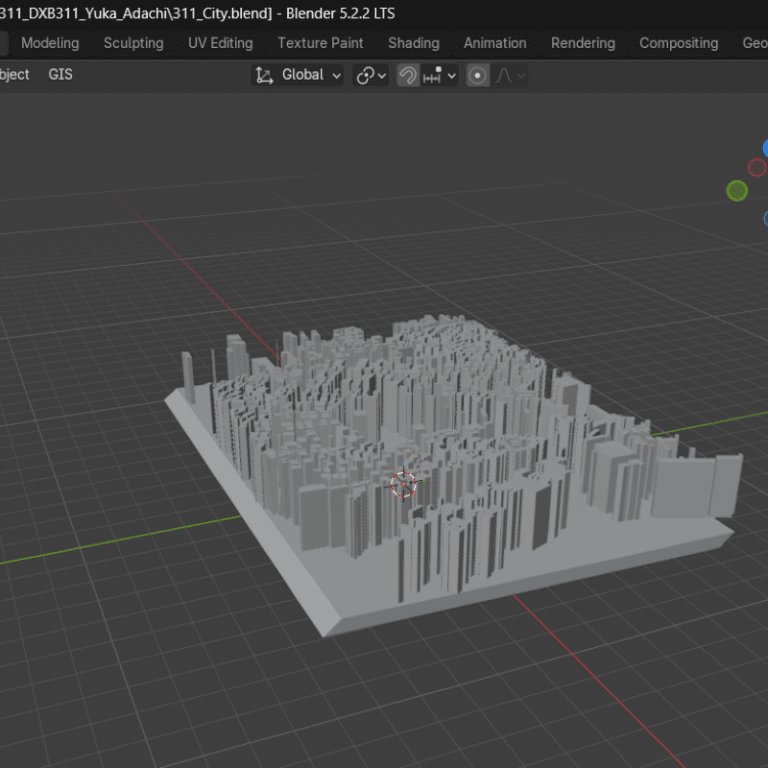
The installation combines a miniature Japanese city, a water tank, and a foam plate representing a tectonic plate. As the audience moves the foam plate, an ultrasonic sensor detects changes in distance. These measurements are used to trigger audiovisual scenes, creating a connection between the audience’s physical actions and the unfolding experience.
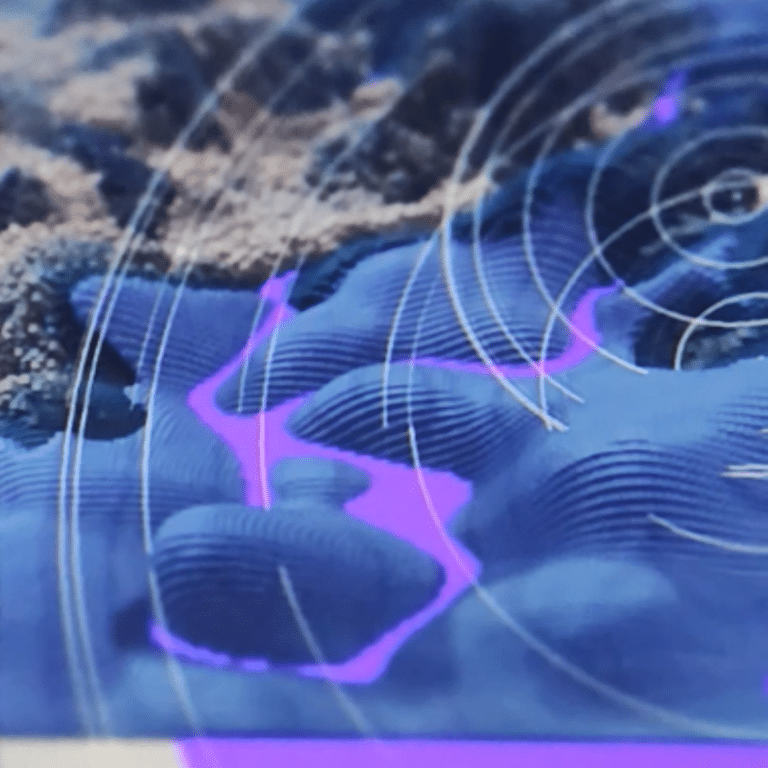
Projected animations and sound communicate aspects of geological movement, earthquake activity, and potential environmental impacts. The miniature city provides a tangible reference point, helping audiences relate the otherwise invisible processes to a familiar built environment.
FROM GEOLOGICAL PROCESSES TO VISUAL STORYTELLING
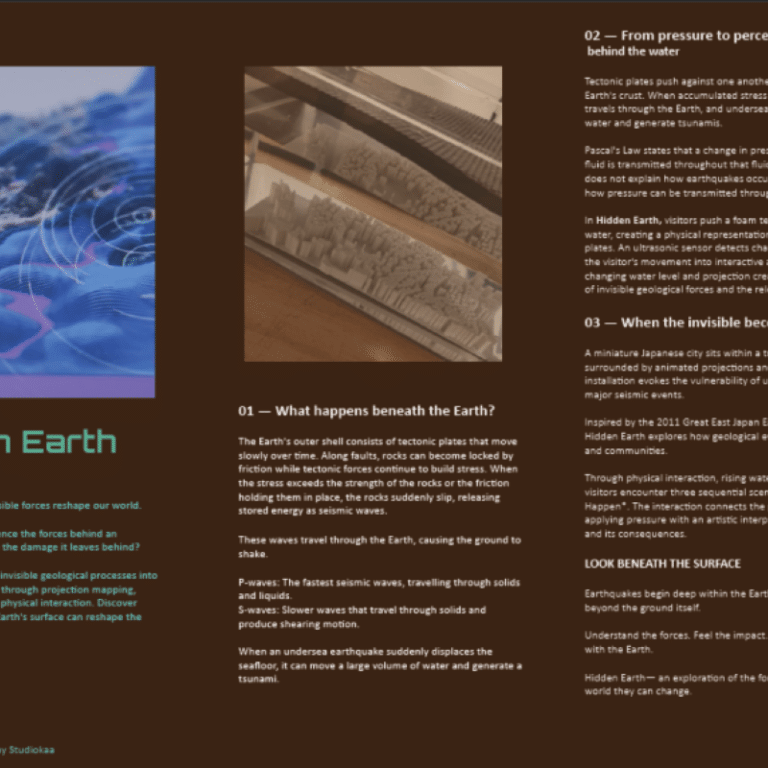
The project translates scientific ideas into an audiovisual narrative. It explores how tectonic movement can lead to earthquakes, how seismic waves travel, and how an undersea earthquake can potentially generate a tsunami.
The visuals and sound are designed to communicate these relationships experientially rather than reproduce every geological process in full scientific detail. By revealing the hidden processes and then presenting their possible consequences, the installation invites audiences to consider the connection between the Earth’s movement and human environments.
“Earthquakes are inevitable; disasters are not.”
— United Nations (2026).
United Nations. (2026). First International Day in Memory of the Victims of Earthquakes. https://www.un.org/en/delegate/first-international-day-memory-victims-earthquakes?utm_source=chatgpt.com
THE TECHNOLOGY
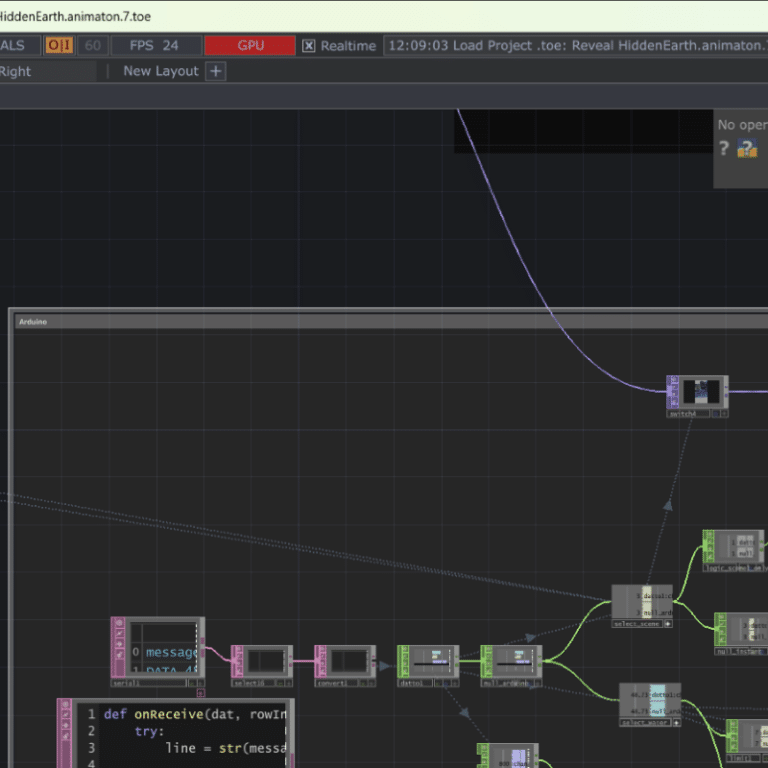
The prototype integrates physical components and digital media to create an interactive projection-mapping experience.
Together, these components connect physical interaction with projected imagery and sound, transforming sensor measurements into an experiential design outcome.
DESIGN DEVELOPMENT
The project developed through research, concept exploration, storyboarding, prototyping, and iterative technical development. Early explorations helped establish how the audience might interact with a representation of tectonic movement and how the installation could communicate geological processes without relying on text-heavy explanations.
The physical model, projection visuals, sensor interaction, and sound were progressively integrated into a working prototype. Technical experimentation helped identify how the physical components and digital media could work together as a cohesive experience.
USER TESTING AND ITERATION
User testing was used to evaluate the interaction, visibility of the projection, technical performance, and clarity of the narrative. Testing indicated that the physical interaction was understandable, while challenges remained with projection visibility, technical reliability, and communicating the meaning of the controls and audiovisual sequences.
These findings informed opportunities for further refinement, including clearer interaction cues, stronger narrative transitions, improved projection conditions, and more reliable audiovisual performance.
FUTURE DEVELOPMENTS
Future development could focus on improving the clarity of the interaction and strengthening the connection between the physical action and the projected narrative. Further testing could explore how different audiences interpret the experience, as well as how sound, projection visibility, and accessible interaction options could be improved.
Ultimately, Hidden Earth aims to encourage audiences to look beyond the visible landscape, reflect on the forces beneath the Earth’s surface, and consider the importance of earthquake awareness and preparedness.