discovering
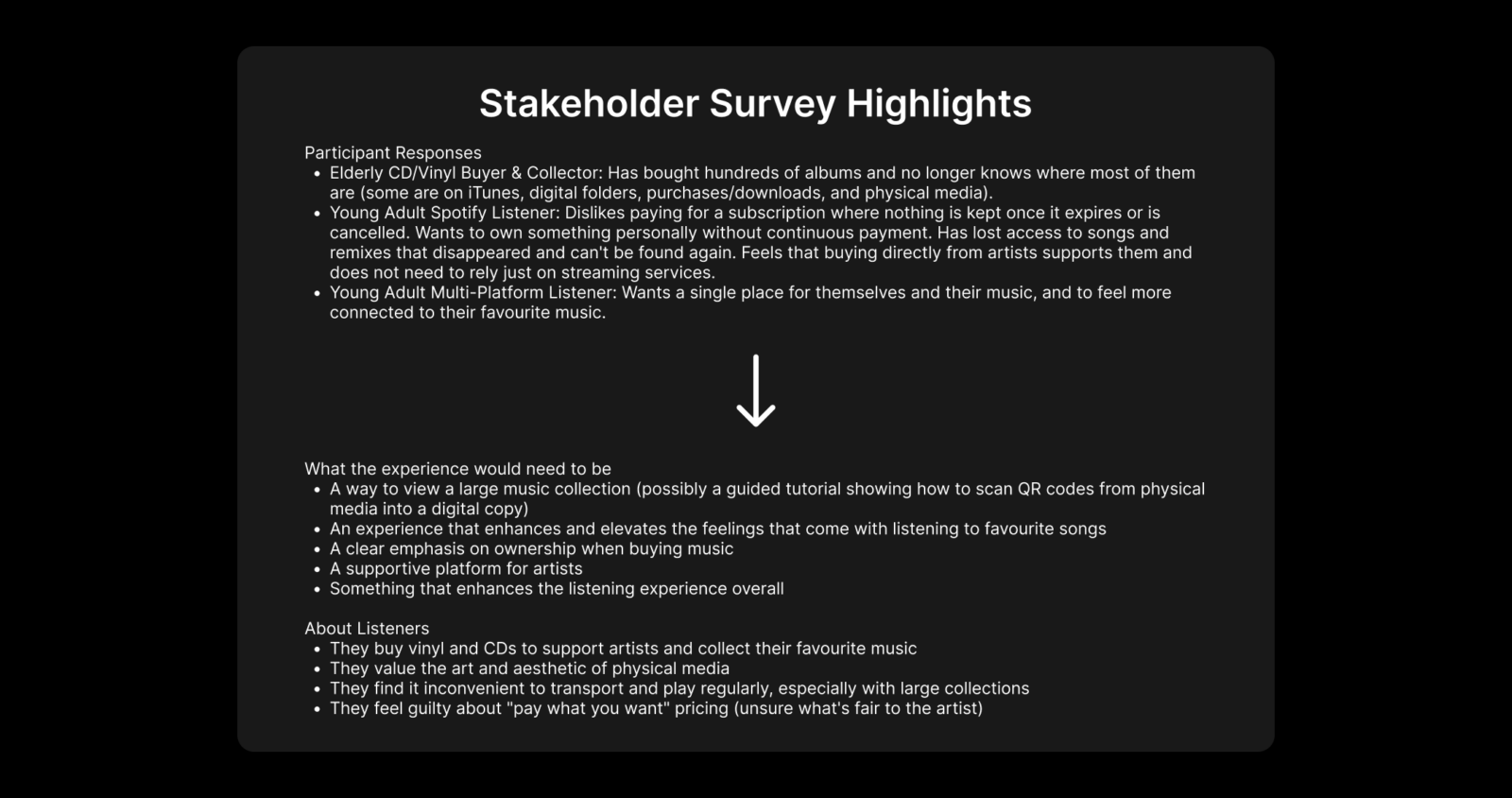
Research began with interviewing stakeholders. Listeners described their frustration with songs disappearing from the streaming services they use. One woman had found it hard to keep track of the purchases made across different stores and mediums. Researching artists payments showed thousands of streams earning only a few dollars ($0.003–$0.005 per stream).
defining
After synthesising the interviews, focus was shifted to finding patterns. Three themes were defined: listeners wanted permanence, artists wanted fair compensation and control, and a general consensus was that discovery favoured mainstream and paid content for placement.
the problem
Modern music platforms prioritise streaming convenience over ownership, causing listeners to lose access to purchased content when licenses expire, while independent artists struggle with unfair compensation and limited discoverability across fragmented marketplace ecosystems.
the problem statement
Music streaming has traded ownership for convenience, leaving both creators and listeners disadvantaged.
This is demonstrated on current music platforms where even songs users listen to regularly can be delisted without warning due to licensing shifts or platform changes, leaving listeners permanently unable to regain access to those songs. Meanwhile, independent artists receive disproportionately small payouts compared to major label releases, and their work gets buried beneath algorithm driven discovery systems favouring mainstream content.
The problem was then evolved into a question:
How might we give music listeners genuine ownership of the songs they love, while ensuring artists are fairly paid for their work?
the design question
ideating
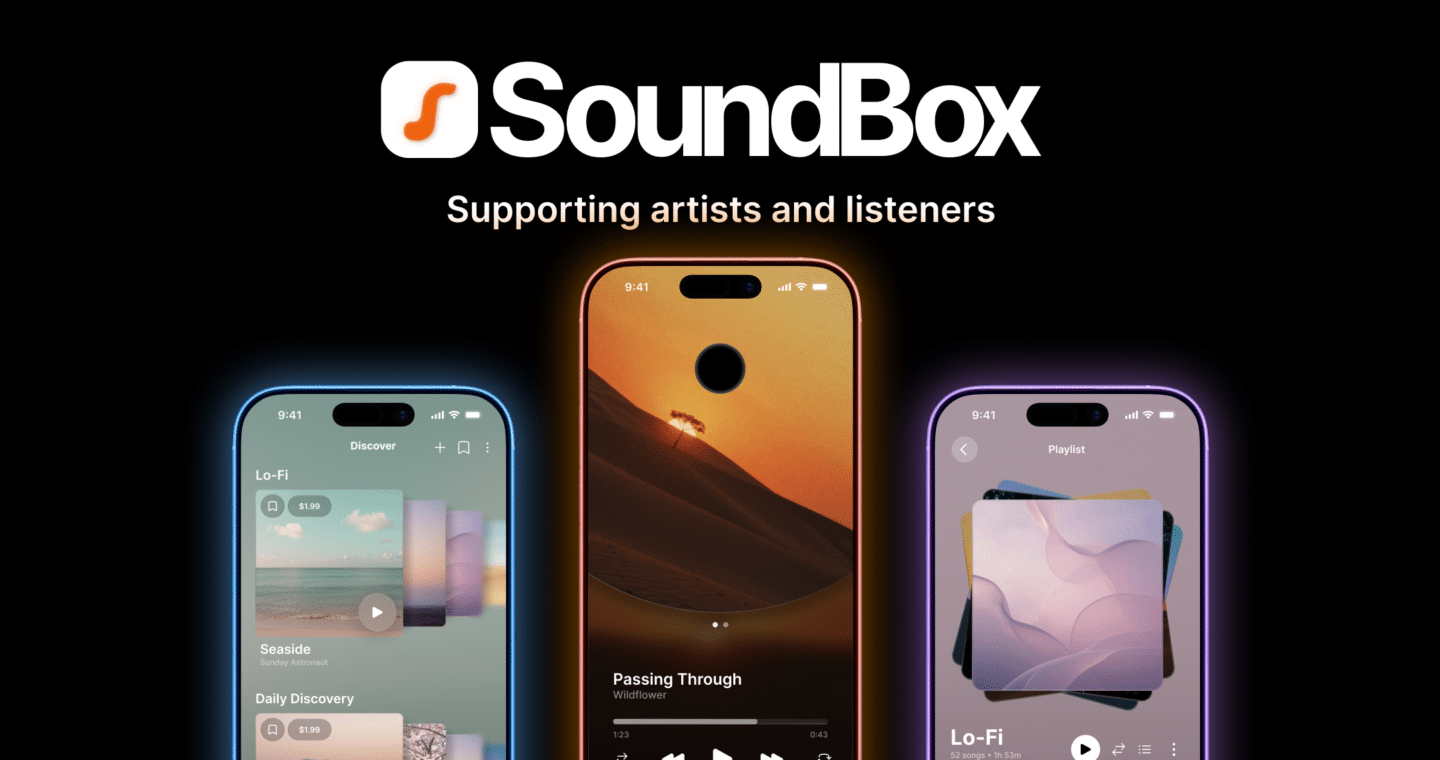
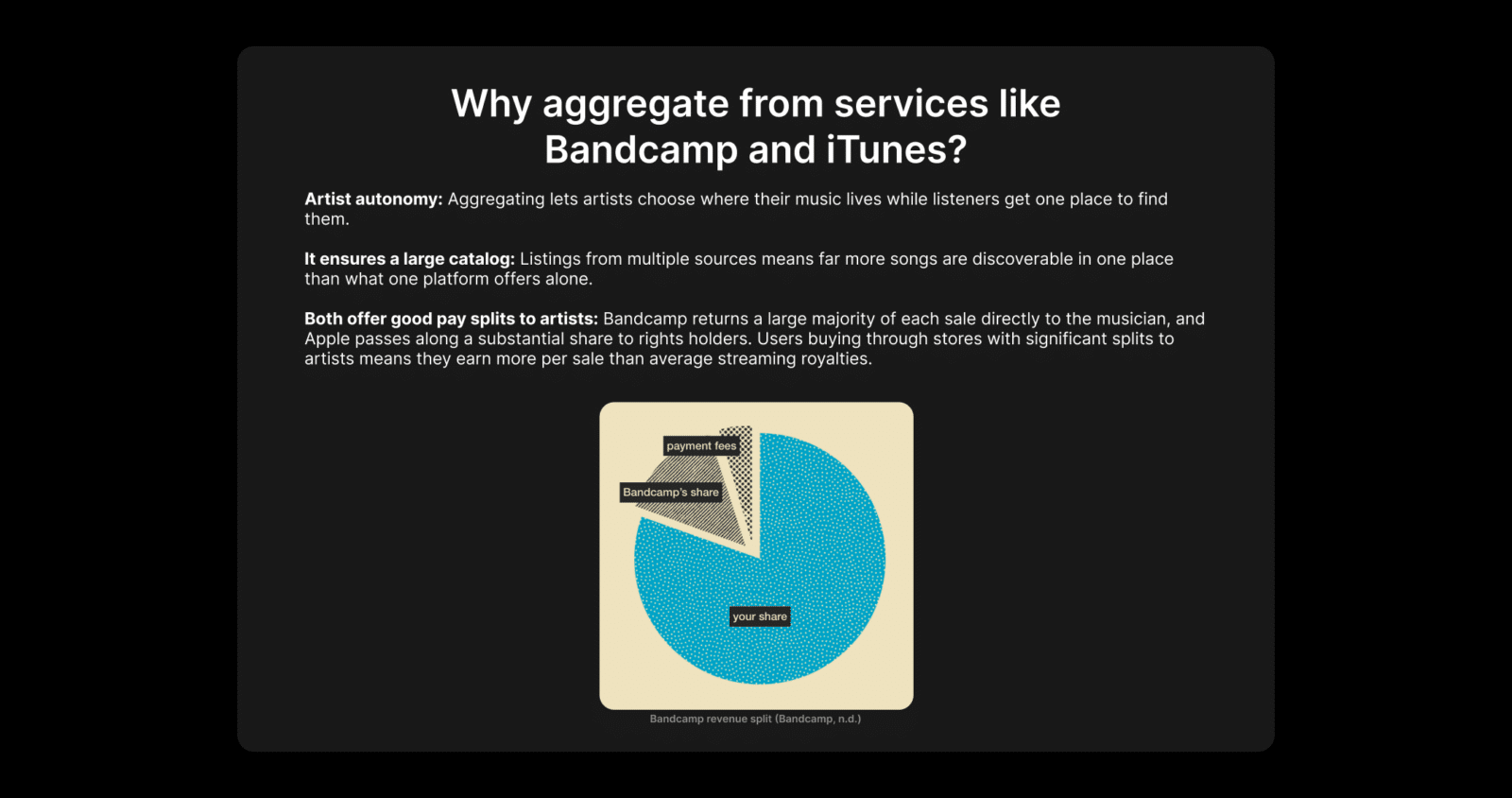
Initial ideas considered ranged from physical vinyl bundles to social based listening experiences. After weighing up the pros and cons of the ideas, the strongest concept proved to a digital aggregator and collection player. SoundBox would surface songs from Bandcamp, iTunes, and others, letting buyers choose where their money went, and letting artists choose where their music was hosted.
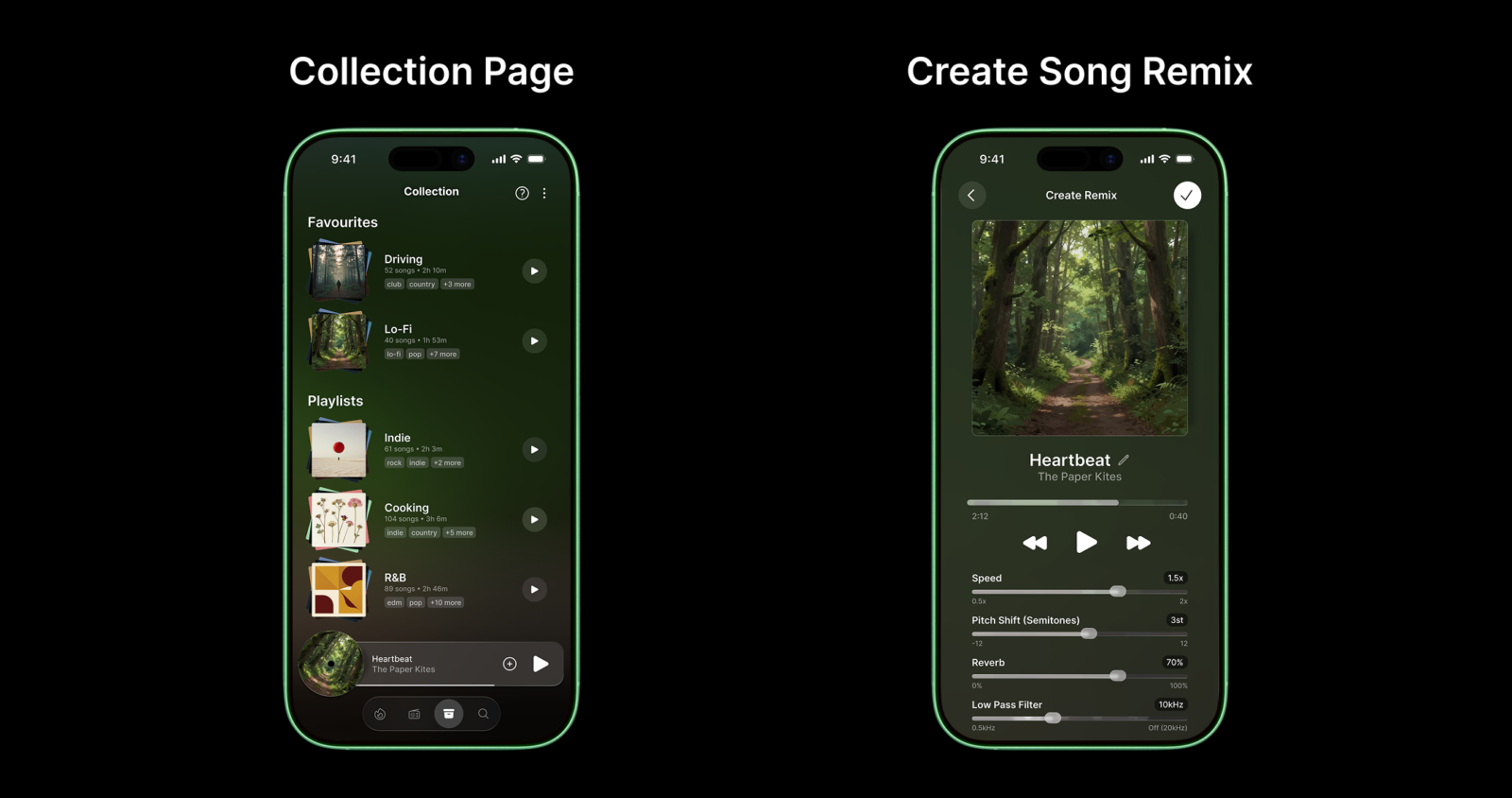
The concept of remixing owned tracks originated when I was playing with the speed setting on a vinyl record player while a song plays and hearing the change in how it is emotionally perceived as the pitch and tempo rises and falls. Bookmarking and importing existing collections followed as supporting features. The chosen ideas served listeners and artists alike.
prototyping
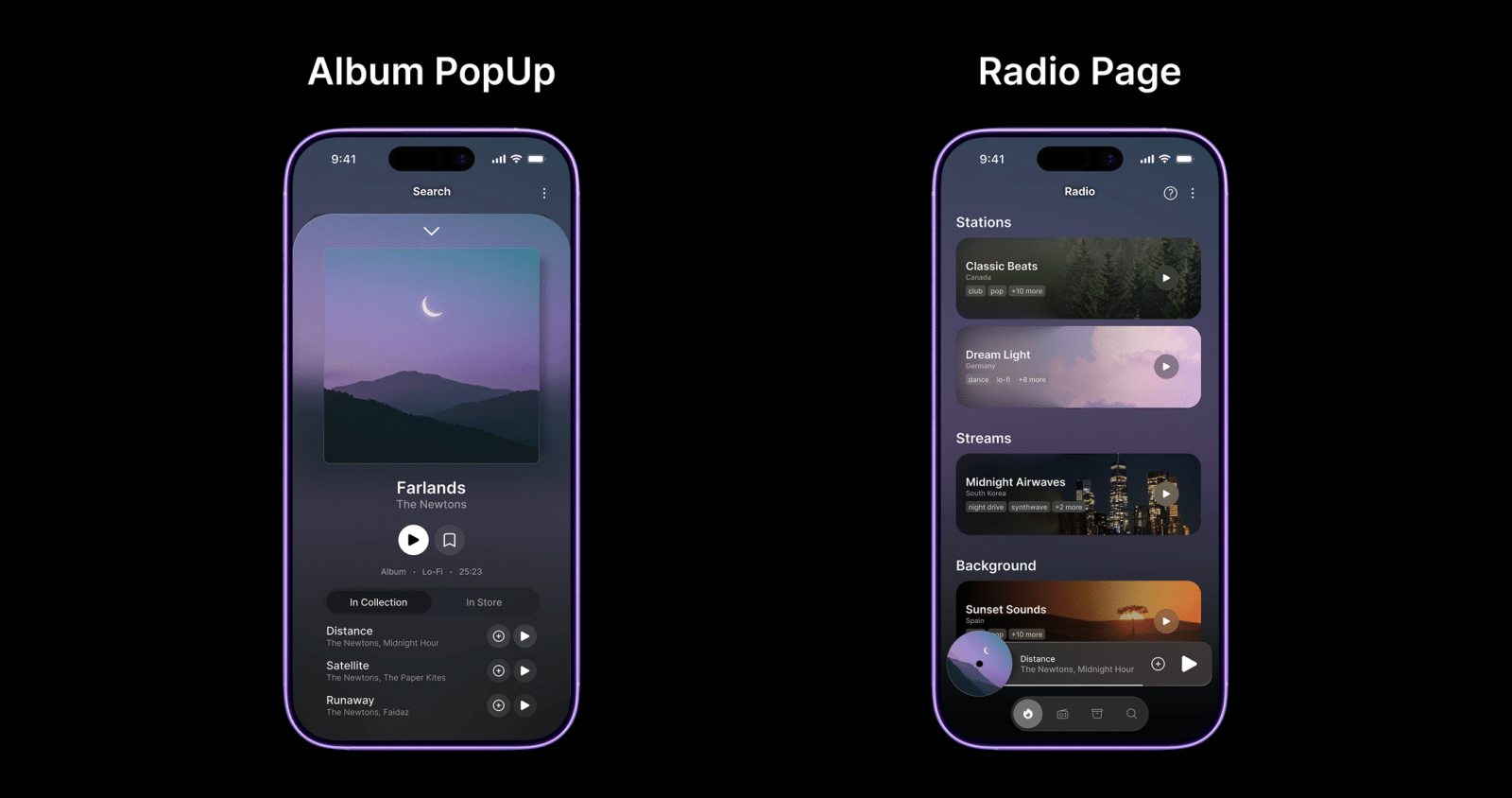
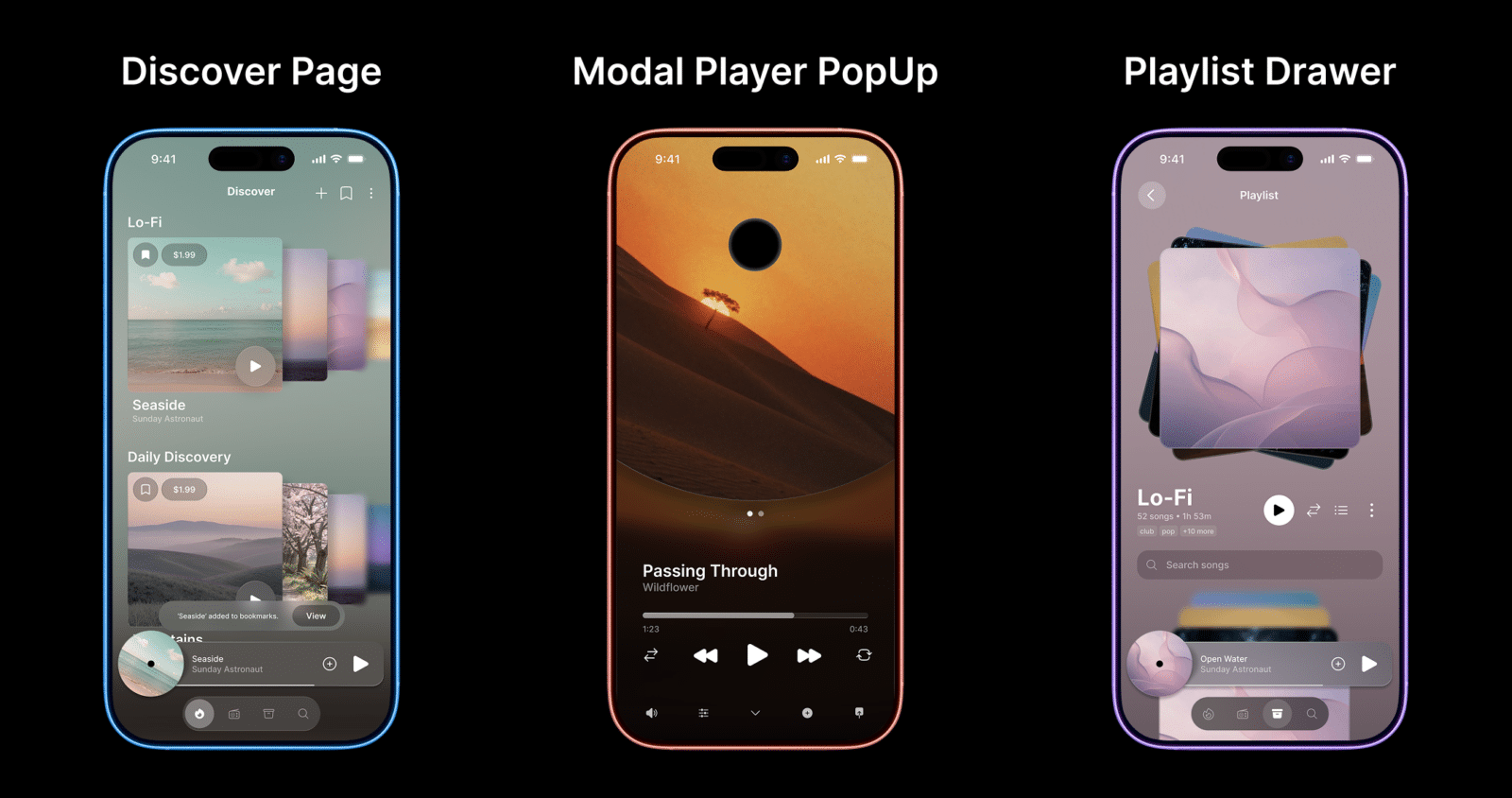
Paper prototypes were created first, followed by Figma medium and high fidelity prototypes in the following weeks. The core loops was prioritised: hearing a song on the radio, tap to bookmark or buy, then find it in their library collection. The remix editor was prototyped with just four sliders (speed, pitch, and reverb, low pass) and was kept intentionally simple so it remained a quick remix creator and prevent it from becoming a control heavy studio tool.
The next week a working prototype was created, and was ready to hand to user testers to observe and refine.
testing
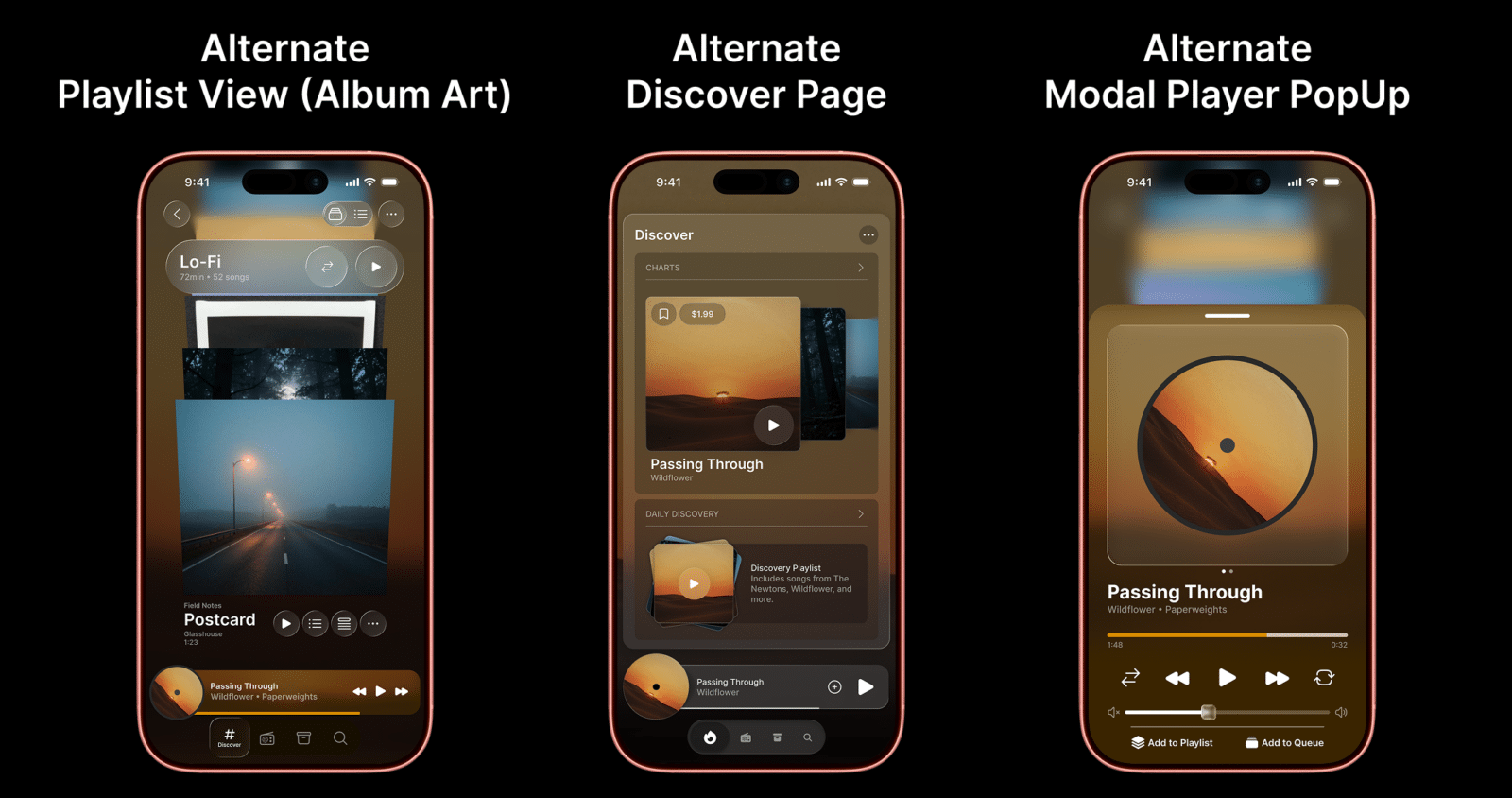
Three rounds of testing was conducted and observed with the facilitator remaining silent while people used the prototype. Round one exposed confusion where users failed to understand the ownership model until a onboarding flow was implemented. Round two centered on feedback: users wanted confirmation that their actions were actually taken, so the action complete notification became more prominent and was given a ‘take me there’ button for actions making changes on other pages.
Round three showed the remix feature interested testers where several spent a significant portion of the test playing with different song remixes. This prompted promoting its place in the layout hierarchy to be more prominent.
Each round changed something that helped the user, and the final version reflected what people actually did and used.
Frequently Asked Questions
-
What is SoundBox?
A music discovery and purchasing app built around owning music. Instead of accessing songs through a subscription, listeners buy songs outright to keep them permanently, and can remix the tracks they own. Discovery is also facilitated through personalised radio feeds that surfaces niche artists alongside familiar ones.
-
How is this different from Spotify or Apple Music?
Those are streaming services where you pay monthly to access a catalogue that can change at any moment. SoundBox is built on purchases. If a song leaves a store’s catalogue, the copy you bought stays yours.
-
Do I have to buy every song I want to hear?
Not necessarily. The radio feature lets you listen and discover freely, listing each track so you can bookmark, buy, or skip it. Bookmarking builds a wishlist of songs to purchase later, so discovery and buying happens when you choose. You can also import your songs you already own and hear previews of songs before you buy them.
-
Why does SoundBox list songs from stores like Bandcamp and iTunes?
Because artists deserve to choose where they sell their music. An artist who prefers Bandcamp’s artist first structure can choose Bandcamp and a different artist who wants Apple’s reach can choose iTunes. Aggregating also means a far larger catalogue than any one store could offer. Both Bandcamp and Apple’s download store pass along a significant share of each sale to artists.
-
How do artists benefit?
Artists receive better per sale payouts than streaming royalties and they have control over which storefront represents them. The recommendation systems on major platforms typically favour mainstream and paid content. SoundBox is designed to surface smaller and niche artists whose work fits what each listener actually likes to listen to.
Whether you have specific questions and want to know more, have ideas or thoughts to share, or just want to swap music recommendations, you can message me via my email listed below.