Interaction - Bachelor

Wander

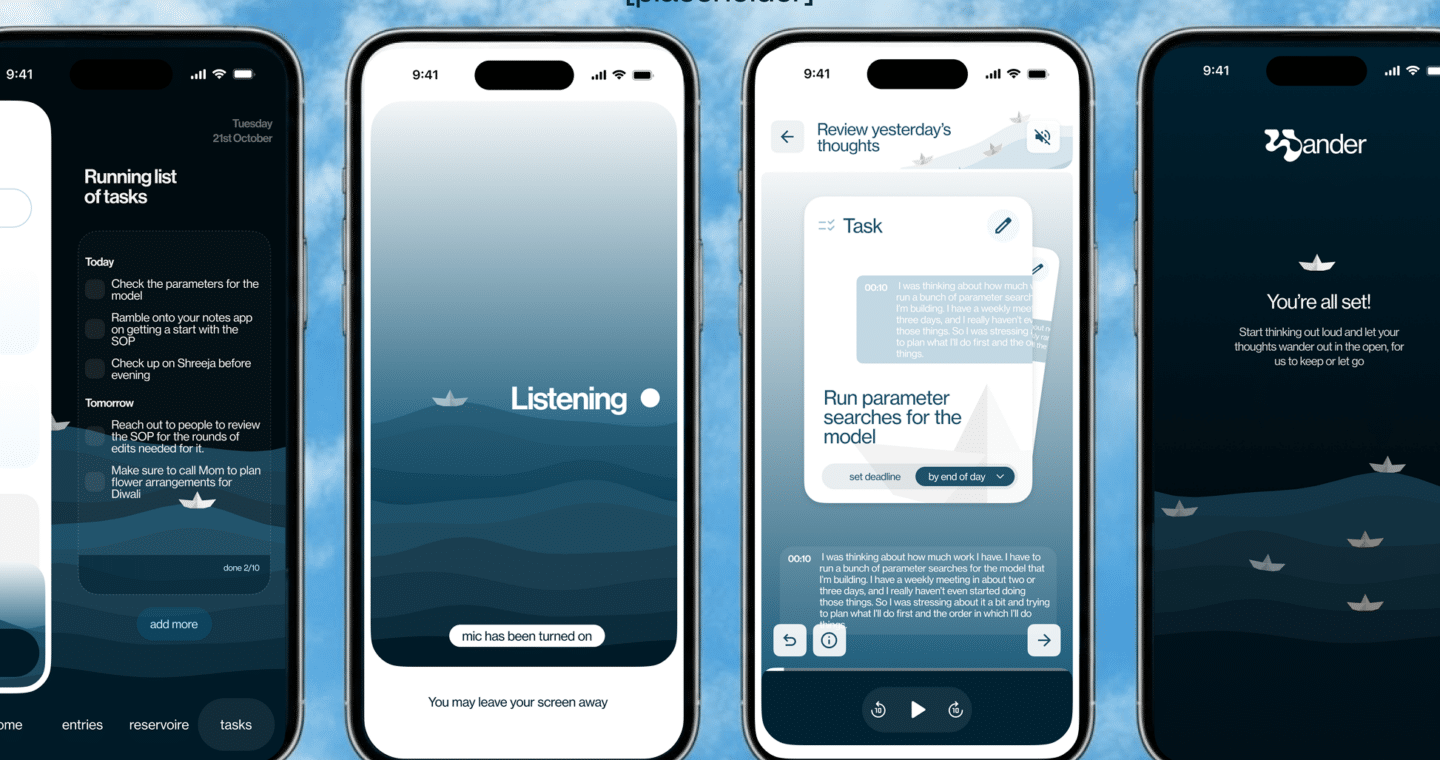
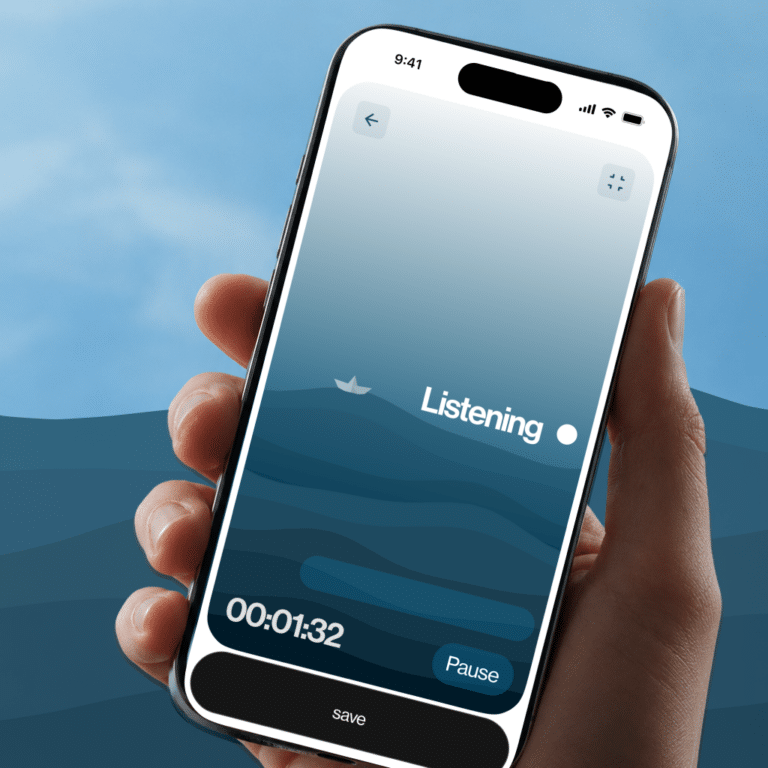
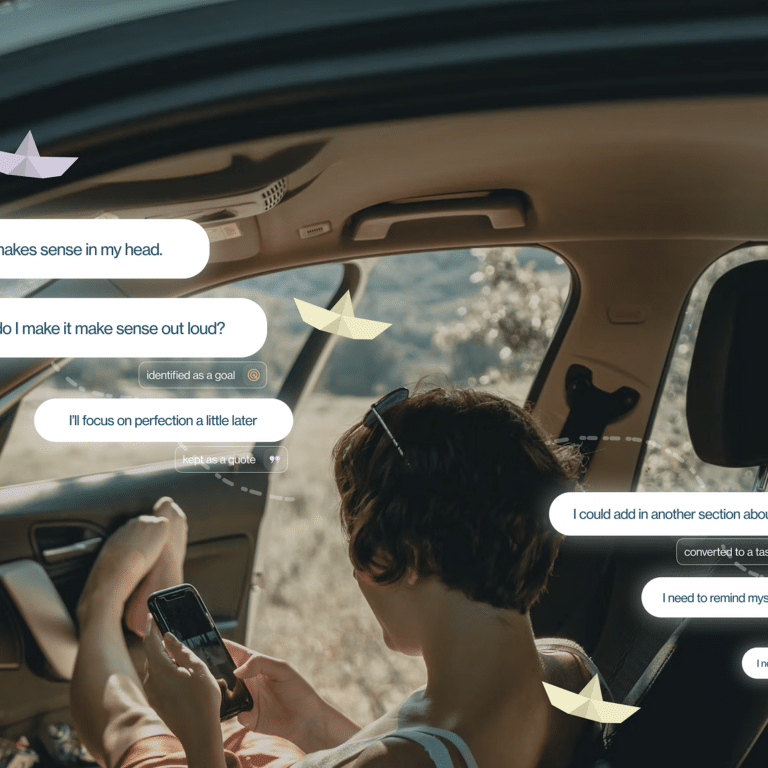
A voice-first repository for your own thoughts, built for people who think by talking (verbal processors). It provides the opportunity to utilize time while engaged in activities that require users to look away from their screens.
WHY THIS IDEA?

As a former resident of Bangalore, a city notorious for its difficult traffic, I’ve observed people lose precious time simply because driving keeps them occupied. Noticing opportunities for activities aided by technology, I responded with soundboarding and companionship as a way to resolve overwhelm among drivers. I was deeply curious how the principles of Calm Technology (articulated by Amber Case) would make a mark on this interesting design opportunity. This further expanded to more use-cases more prevelant for verbal processors.

VERBAL PROCESSORS: WHO ARE THEY?

Some people think by talking. They work out what they mean while saying it, and they lose the thread when they stay silent. People differ a lot in how much they use inner speech. For those who lean on it, speaking aloud turns a private stream of thought into something they can hear, test and shape. Talking out loud can simulate auditory feedback loops which help the brain hear itself think, supporting decision-making and comprehension.

Speakers who feel well listened to become clearer about their own views and naming feelings aloud can reduce emotional reactivity. The problem is that a human listener isn’t always there, and many people feel too self-conscious to think out loud in front of one. Verbal processors nowadays usually resort to means of untangling their thinking through typing, self talk through journals, voice memo’s and talking to AI.

THE METAPHOR

The metaphor used in this is the simple act of leaving paper boats into the ocean. The ocean is a reliable, silent witness. It rises and falls as you speak. Every idea recorded and processed are collected as paper boats, each having its own quality. After you’ve spoken, you get a chance to be deliberate about keeping them or abandoning them.

Shriya Harish Hoskere

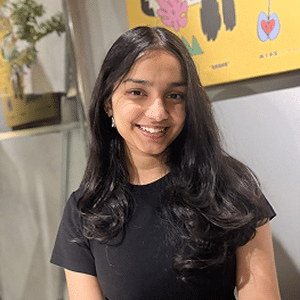
Shriya is an interaction designer who loves bringing liveliness and emotion to emerging technology. She pours her passion into classical music and is rooted to her cultural background. Known for her visual design capabilities, she is keen on being critical and reflective in her thinking to make technology feel more human, and hopes to keep growing her skillsets while remaining ever-enthusiastic to learn more.

Vote For This Project

"*" indicates required fields

This field is for validation purposes and should be left unchanged.
This field is hidden when viewing the form
Project